Following last month's experience model, this month we will also devote ourselves to touring villages in celebration, to get to know their traditions better. For August we have chosen five villages to visit. However, we propose six days, although each person can adapt it as they prefer according to their interests and choose other days to visit the villages.
A BIT OF HISTORY. We know where we come from to decide where we're going.
Let's recap the information from last month, in case anyone hasn't had a chance to read it yet: The patron saint festivals of the Marina Alta are a blend of religious traditions, medieval history and Mediterranean culture, celebrated with great intensity in each town, often centred around patrons such as local virgins or saints. Processions and other religious ceremonies are dedicated to them.
Also of note are the Moros y Cristianos (Moors and Christians) festivals, celebrated in Calp, Pego, Xàbia, and El Verger, among others. They include parades and battles commemorating the 13th-century Christian conquest and the Mudejar revolts led by Al-Azraq against James I.
Tips for the routes
- Wear comfortable shoes and bring water.
- Respect nature and architectural remains.
- For more information, consult the tourist information offices.
SUGGESTED ITINERARIES. Step by step, we make our way.
Beniarbeig
Stage 1: Feast of Saint Dominic
At the beginning of August, the feast in honour of Saint Dominic is celebrated in Beniarbeig. It always falls on the first weekend. We suggest you visit the village on Saturday the 1st. There is a very full programme of events, including games, community dinners, processions and dancing. This is a very pleasant day to stroll around the village, as the streets have been decorated and there's a great atmosphere. With the heat we're having, you can take the opportunity to have a beer in one of the bars.
After recharging our batteries, we recommend taking an urban walking tour. We'll start the tour at Plaza 9 d'Octubre, where you'll find the current town hall and the municipal library. This is a ravine that was channelled at the beginning of the 21st century. If we take a detour from here towards Calle Sant Joan, we'll find the oil mill at number 10. Returning to the square, at the junction of Sant Joan Street and Avenida de la Pau, you'll find the main information panel and, to the right along the avenue, the Corralet, which is an old medieval alleyway that used to connect to the other side of the street and was sealed up in the 1970s. It has a courtyard with a well in the middle. If we take the other street and go down, we will come to Major Street, where the old Casa Badia is on one side, and the 18th-century Church of St John the Baptist on the other. Continuing along the street where the church is, Calle Sant Roc, towards Avenida de Dénia, you will see the Senyoria house on the corner.
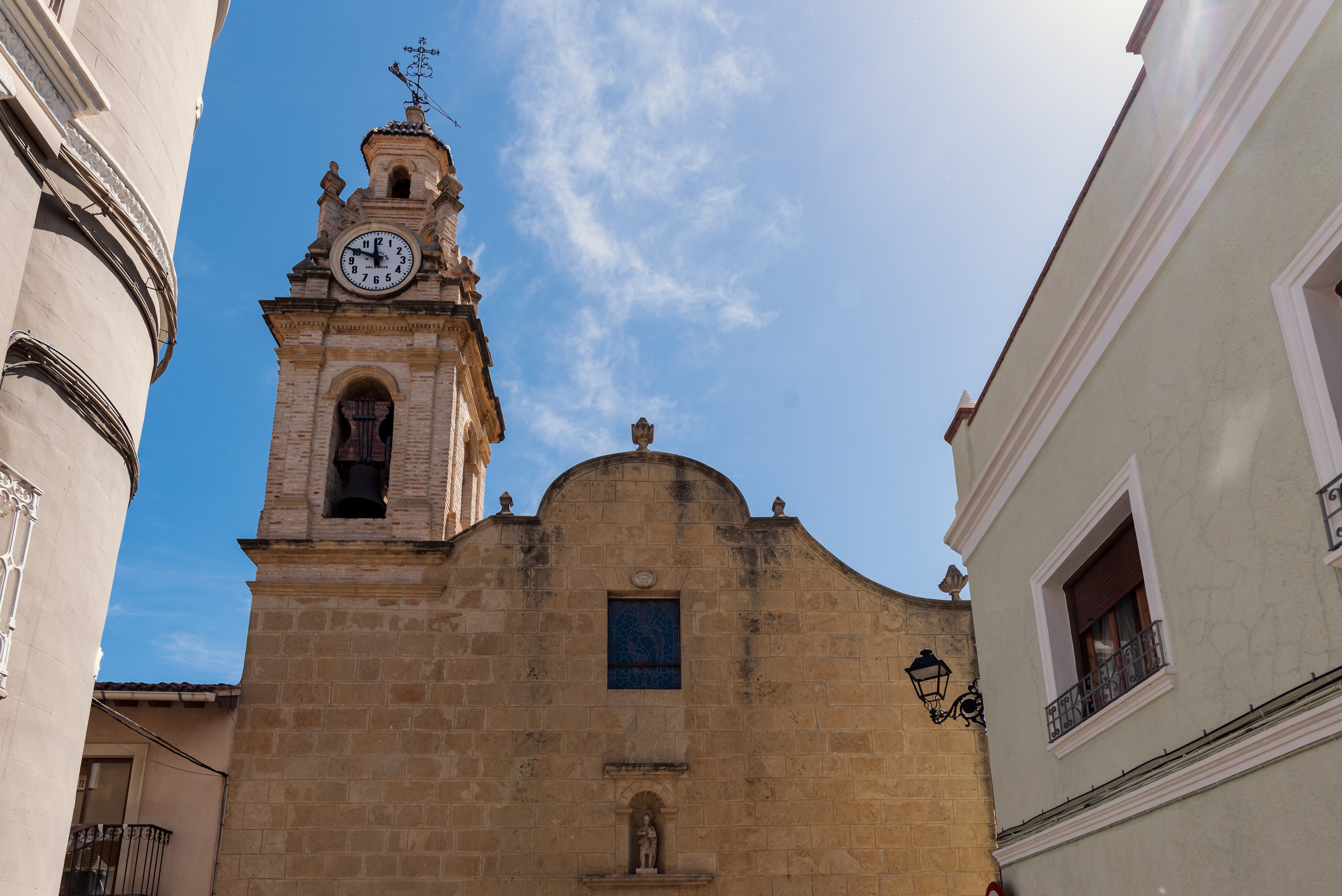
Continuing along Avenida de Dénia, we will leave the village via the Meridian Bridge, which crosses the River Girona. On the right is a recreational area where the Old Beniarbeig Bridge stands, built between 1906 and 1917 as a monumental relic. A little further on, opposite an industrial shed, is the riurau.
Gata de Gorgos
Stage 2: Festivities in honour of the Most Holy Christ of Calvary
The patron saint of Gata de Gorgos is the Most Holy Christ of Calvary, and the festivities in his honour are held from the end of July to 6 August, the day of the Most Holy Christ. The origin of the town's devotion to the Christ dates back to 1762, when a priest from Dénia, Vicente Mulet, who was originally from Gata, gave a statue of the Christ to the town. Popular tradition has it that he found it by the seaside. The festivities consist mainly of religious events, although there are also many other diverse activities: music festivals, square dancing, performances by the Gata de Gorgos Musical Union, games for the little ones, fireworks, and much more.
We suggest you visit the town on the 5th and 6th of August. On the evening of the 5th, there is the traditional flower offering by the quintos and quintas, both young and old, in their traditional dress. At midnight, the impressive concert by the Musical Union takes place in the Church Square. This is the most important concert of the year for the town and includes the anthem of Gata de Gorgos.
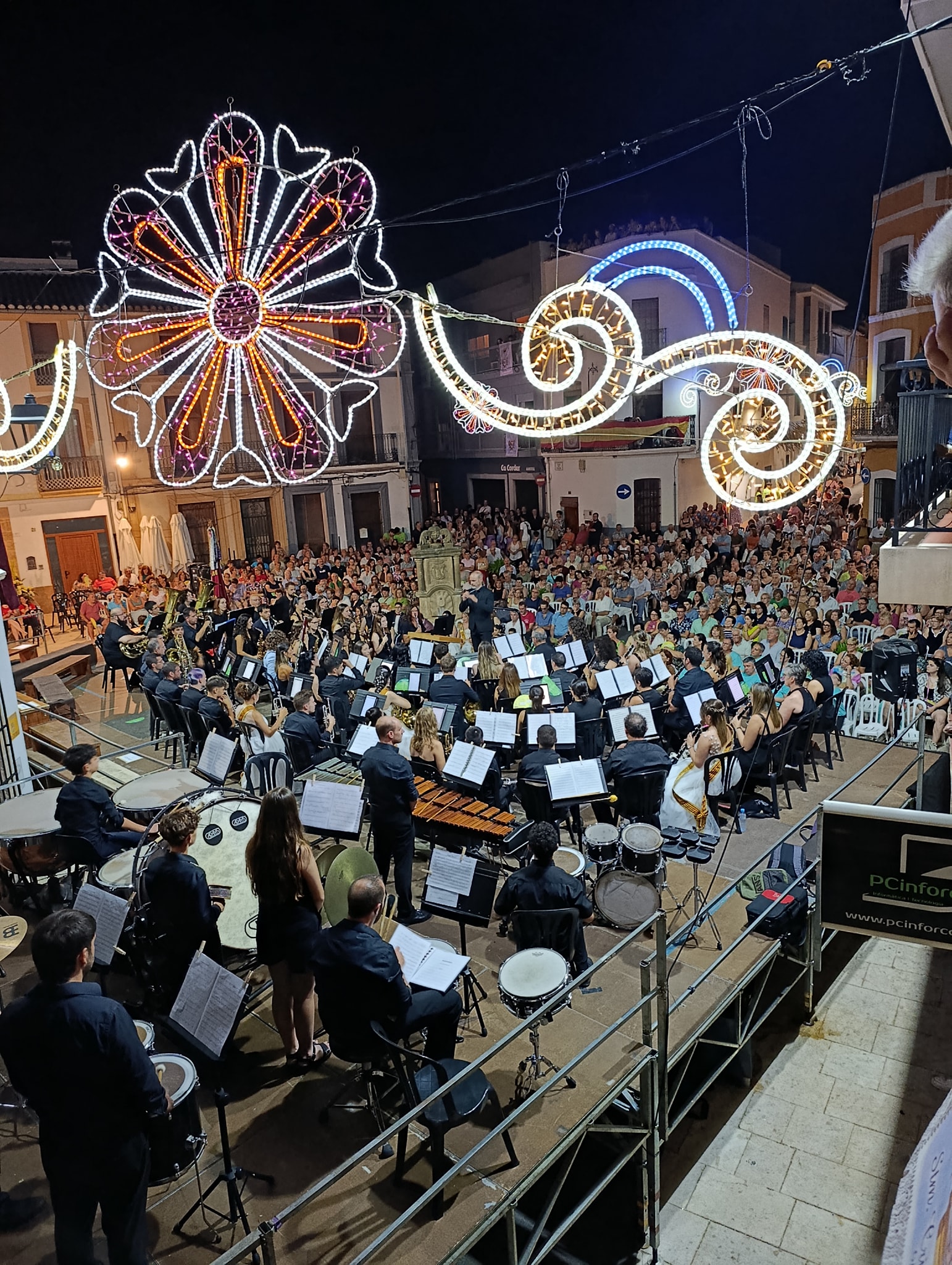
The next morning, the band collects the quintos and quintas to go to the vi d'honor, where a firework display will also be launched. In the evening, a procession with the band and the bagpipe band will accompany the quintos and quintas, the figure of Christ, and all the men and women who wish to take part to the Calvari. Once there, the Gojos are played to the Most Holy Christ. Finally, to conclude the festivities, there is a spectacular firework display, for which practically the whole of Gata heads to the area of the Sorts and Avenida de Alicante to witness it.
Parcent
Stage 3: The Feast of Saint Lawrence
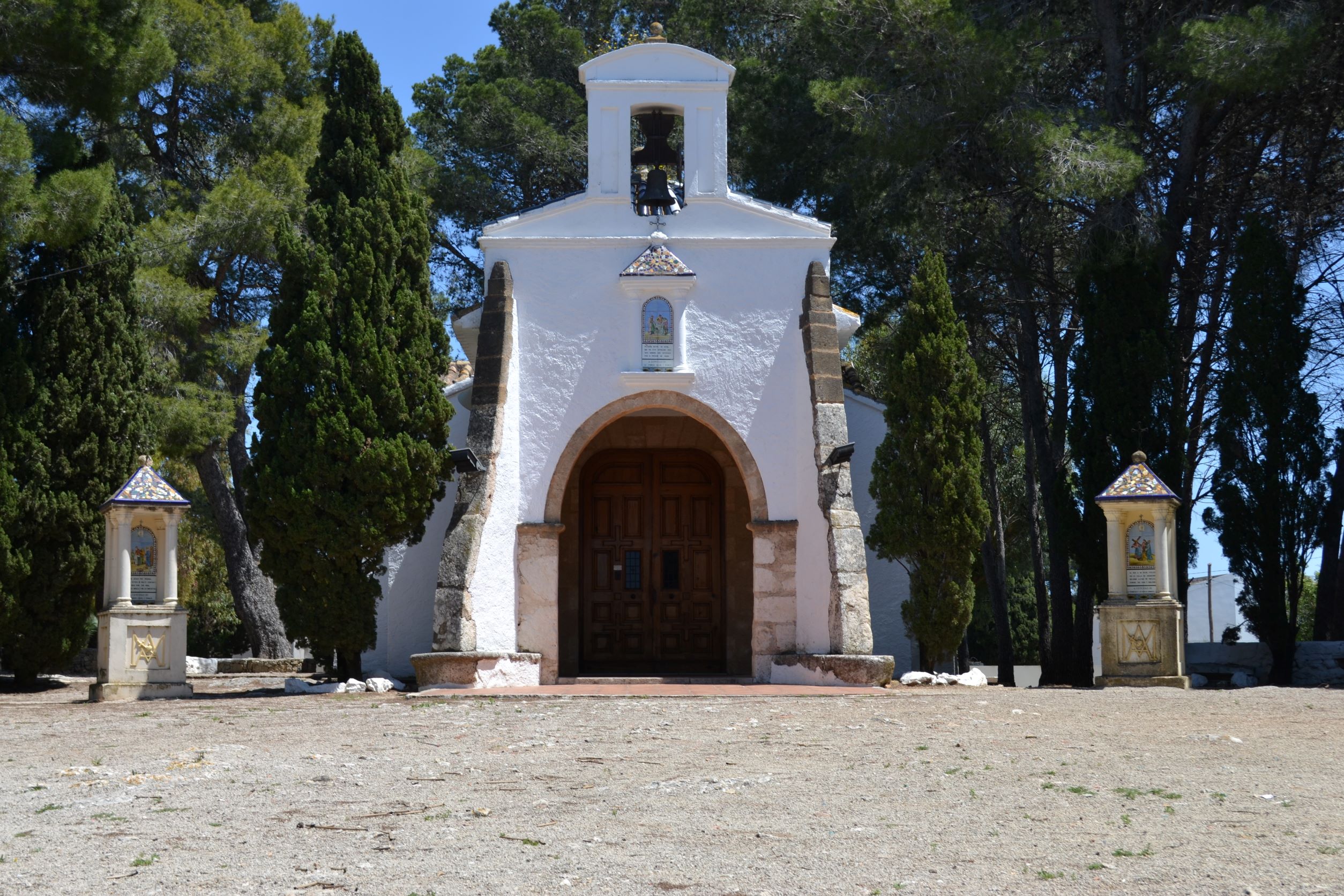
The patron saint festival of Parcent is dedicated to Saint Lawrence and is celebrated between the 9th and 16th of August. Saint Lawrence of Rome was a deacon and martyr who was sentenced to be roasted on a gridiron in the 3rd century; his feast day is on the 10th of August. We recommend visiting the village on this day to enjoy the processions of the male and female festa-goers, the game of pelota and the dancing in the square. If you are interested in the sport of pelota, you can also go on the 16th, when there is a “pilota grossa” tournament. In the evening, to conclude the festivities, there is a public supper and dancing in the square.
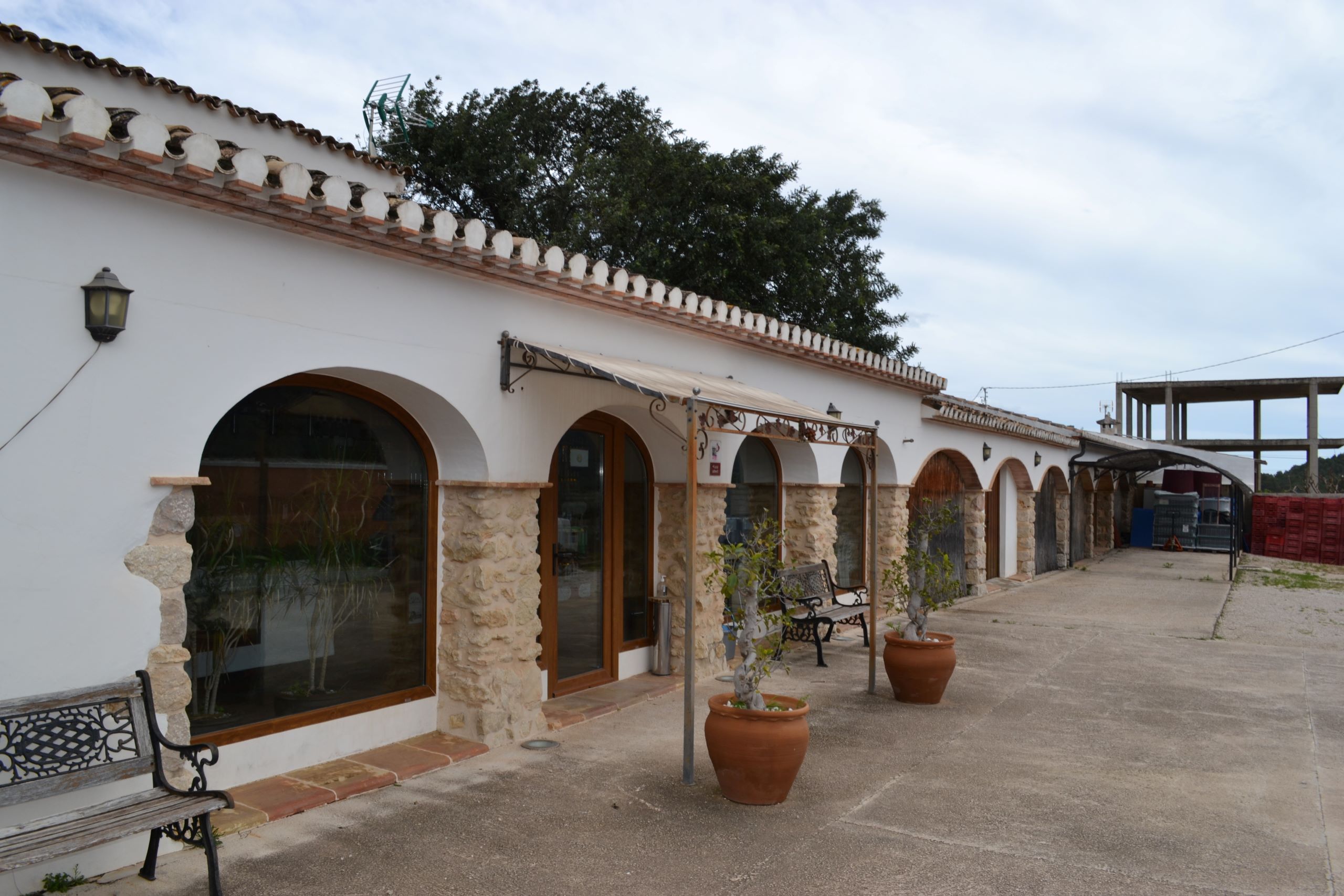
If you have time to spare and are interested in the area's typical architecture, we suggest an urban itinerary that takes in several areas with riuraus. Riuraus are structures that appeared in the Valencian lands in the 18th century. They are linked to the period of growth for raisins, which took place mainly in the 19th century, a time of booming economy. This structure is an essential element in the process of making raisins, whose function was to serve as a shelter for the canyizos, where the grapes were spread out to dry when rain or the nightly dew could have soaked and rotted them. In Parcent you will find the Quintanes, the Calvari and the Arenal, some visible and others hidden. We invite you to discover them. We recommend taking the Pansa path, used for transporting it. You can also discover Maria's riurau in the Pinars district, which is a country house set in a fully restored riurau.
El Verger
Stage 4: Moorish and Christian Festivities
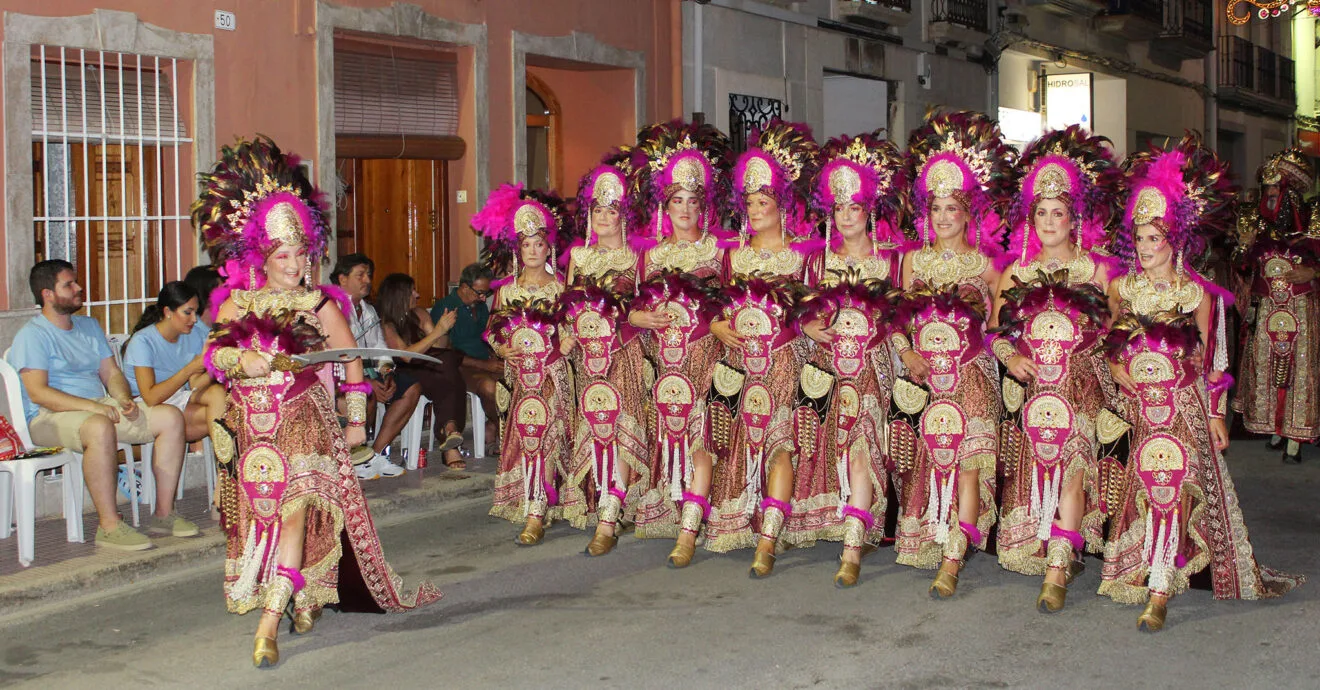
For El Verger, we have chosen the Moorish and Christian Festivities, which have been held from the 9th to the 16th of August since 1978, as part of the patronal festivities. The most important day is the 15th, with the gala parade and the band procession. It is a spectacular parade, where you can appreciate the majesty of the costumes and the music that accompanies each filà. This usually takes place in the evening, so you can use the rest of the day to discover interesting places in this town.
El Verger is notable for being the only municipality where a sugar trapig or mill, known as the Casa del Trapig, has been located to process sugarcane cultivated mainly between the 15th and 16th centuries. In later years, it was used as an oil mill to produce oil. Several utensils were found in the area, such as clay vessels for storing sugarcane juice and three impressive millstones, which highlights the great importance of the oil mill. These stone millstones were used to extract sugarcane juice and were turned by animals. The size of one of the mills, at over one metre seventy in diameter, makes it the largest piece found. The Casa del Trapig del Verger appears in historical documents from 1580, but it is thought to have already existed in the 15th century.

Jesús Pobre
Stage 5: The “Escaldà” Festival
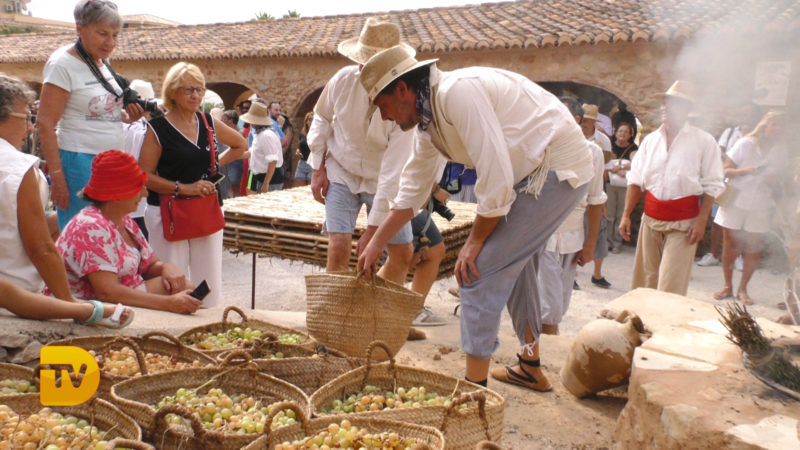
Jesús Pobre is a village marked by an agricultural tradition based mainly on two crops: grapes and wheat. For this reason, we suggest visiting on the last Sunday of August, when the “Escaldà” festival is held, recreating the process of turning grapes into raisins. It begins with the firing of the oven by the “fogater” (the oven-tender), the laying of the canes, and the filling of the cauldron with water and olive leaves to give the raisins their characteristic golden colour. This activity lasts all morning, bringing all the participants together around the large riurau of the Lord of Benissadeví. Traditional dances are performed at the end. The festival is now firmly established as an essential event for the revival of rural life and local history.
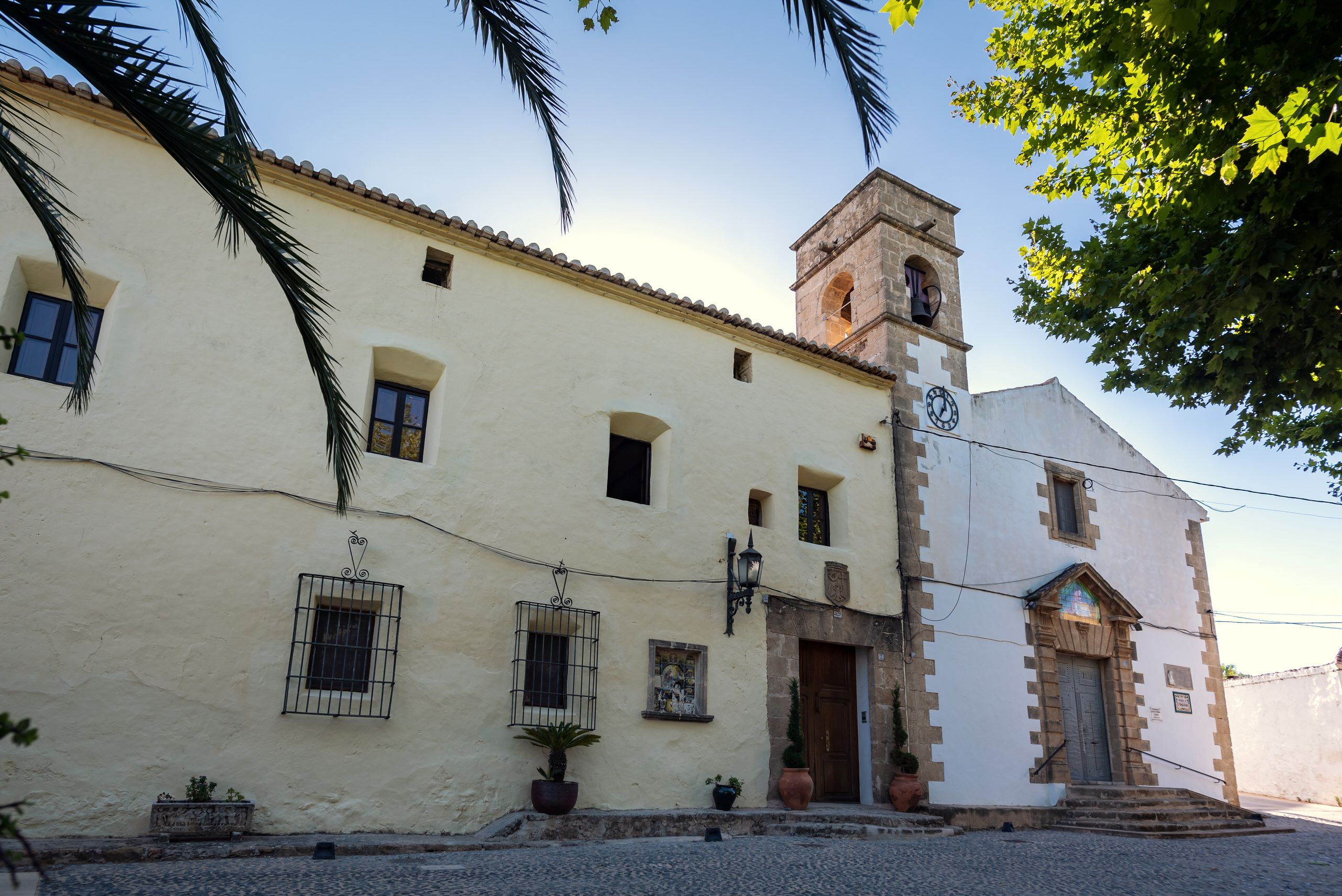
We can also take the opportunity to stroll around the village, passing by Father Pere's well, located in the village centre on Eras Street. It is a communal well, where all the villagers could go to get water. This is a phenomenon from centuries ago, perhaps from the 18th century. In fact, it already appears in one of the ceramic altarpieces from the second half of the 18th century found inside the Convent of Jesús Pobre, where Father Pere is shown kneeling before a well, although its appearance is not the same as what we can see today.

The church and convent are also interesting places to visit. Their origin, as well as the name of the village of Jesús Pobre, dates back to when Father Pere found the image of a Reclining Christ, which he took to the hermitage of Montgó, where he had established himself with his first mass in 1649. There he received the divine inspiration to found a hermitage and a hospice, which he carried out in the old settlement of Benissadeví, where he went with his Christ, whom he called Jesus Pobre. The church of Jesus Pobre was built between 1660 and 1668, and the hospice became a convent for Franciscan friars. It should be noted that Father Peter himself went to the court in Madrid, during the reign of Philip IV, and succeeded in securing the foundation's royal patronage from Queen Isabella of Bourbon, as well as that of her daughter, Maria Theresa of Austria, and other noblewomen of the court.
*This experience is designed to be undertaken in four stages, corresponding to four different days. We suggest some routes, but each person can adapt the experience to their abilities, physical endurance and interests. If you'd like more information or additional places to visit in each village, you can visit the Descobrim la Marina Alta website and tailor the experience to your tastes with your rucksack.
AND EVEN MORE. At the table and in bed at the drop of a hat.
 Where to buy |  where to eat |
 where to sleep |  Activities and others |