This month's suggestion takes us to one of the most powerful landscapes of the Marina Alta: the coastal strip that runs from the Rotes of Dénia to the cliffs of Poble Nou de Benitatxell. It is an experience of coast, rock and open horizon. A route through paths, viewpoints, caves and coves where the Mediterranean Sea sets the pace for the landscape and the walk.
The route we take as our thread is the one featured in the Passaport Marina Alta and MACMA materials dedicated to the cliffs and coves of Dénia, Xàbia and Poble Nou de Benitatxell. This proposal outlines several sections that can be adapted by each person according to the time available, physical fitness or the day's interests: from the end of the Rotes to the Cova Tallada, from the Cova Tallada to Xàbia harbour, the option of making the journey between Dénia and Xàbia by boat, the route from cove to cove around Xàbia and, finally, the path between Cala Moraig, Cala Llebeig and the Barranc de la Viuda.
A BIT OF HISTORY. We know where we come from to decide where we are going.
The coast of the Marina Alta has a very distinct personality. The limestone terrain plunges into the sea, creating a succession of cliffs, inlets, caves and small coves that illustrate both the geology and the human life of the coastline. The rock has been shaped over millennia by marine erosion and karstic processes, resulting in one of the most rugged and recognisable landscapes in the region.
This coastline is also a place steeped in history. The Cova Tallada, between Dénia and Xàbia, is one of the clearest examples of the relationship between the coast and human activity, as for centuries it served as a quarry for rough stone. Further south, in Poble Nou de Benitatxell, the cliffs hide caves, geological faults, old fishermen's access routes and cliff-side fishing spots that are part of a very specific coastal culture. MACMA itself describes Benitatxell as a municipality situated ‘between cliffs and sheer drops’ that conceal the coves of Moraig, Llebeig and dels Testos, as well as a remarkable geological and underwater heritage.
The coast is not just a backdrop. It is a space for work, for movement, for defence and for exploiting resources. Cliff fishing platforms, for example, were structures suspended from the vertical rock face from which fish were caught at night by light. MACMA recalls that in Poble Nou de Benitatxell this activity was of great importance until well into the 20th century, and that even today you can see remains of that harsh and dangerous system.
Tips for the routes
- Bring suitable footwear, water and sun cream.
- On the cliff and cove sections, you must walk with great care.
- The route's information explicitly states that you must always follow the signs and not enter coves or paths where access is prohibited.
SUGGESTED ITINERARIES. Step by step, we make our way.
Denia
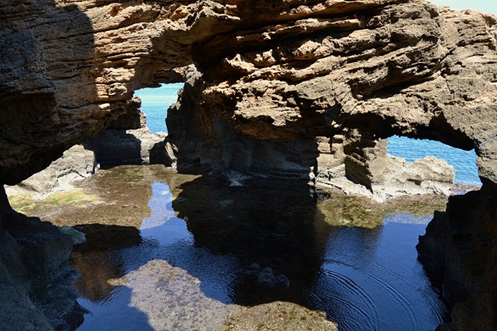
Stage 1: from the end of the Rotes to Cova Tallada
We can begin the experience at the end of the Rotes, in one of the best-known landscapes on the Denia coastline. We suggest this first section as a short walk of about 3 km and roughly 40 minutes, ideal for getting started and beginning to understand the rocky character of this part of the coast.
The path approaches the sea and follows the cliff line to the Cova Tallada. This spot is one of the great symbols of the region. The cave combines geological and historical value, as its current shape is linked both to natural processes and to the quarrying of rough stone. The visit allows you to see how the sea penetrates the rock and how the coastline of the Marina Alta has also been an area for material exploitation.
After the visit, you can either turn back or continue towards Xàbia to extend your day.
Between Dénia and Xàbia
Stage 2: from the Cova Tallada to the port of Xàbia
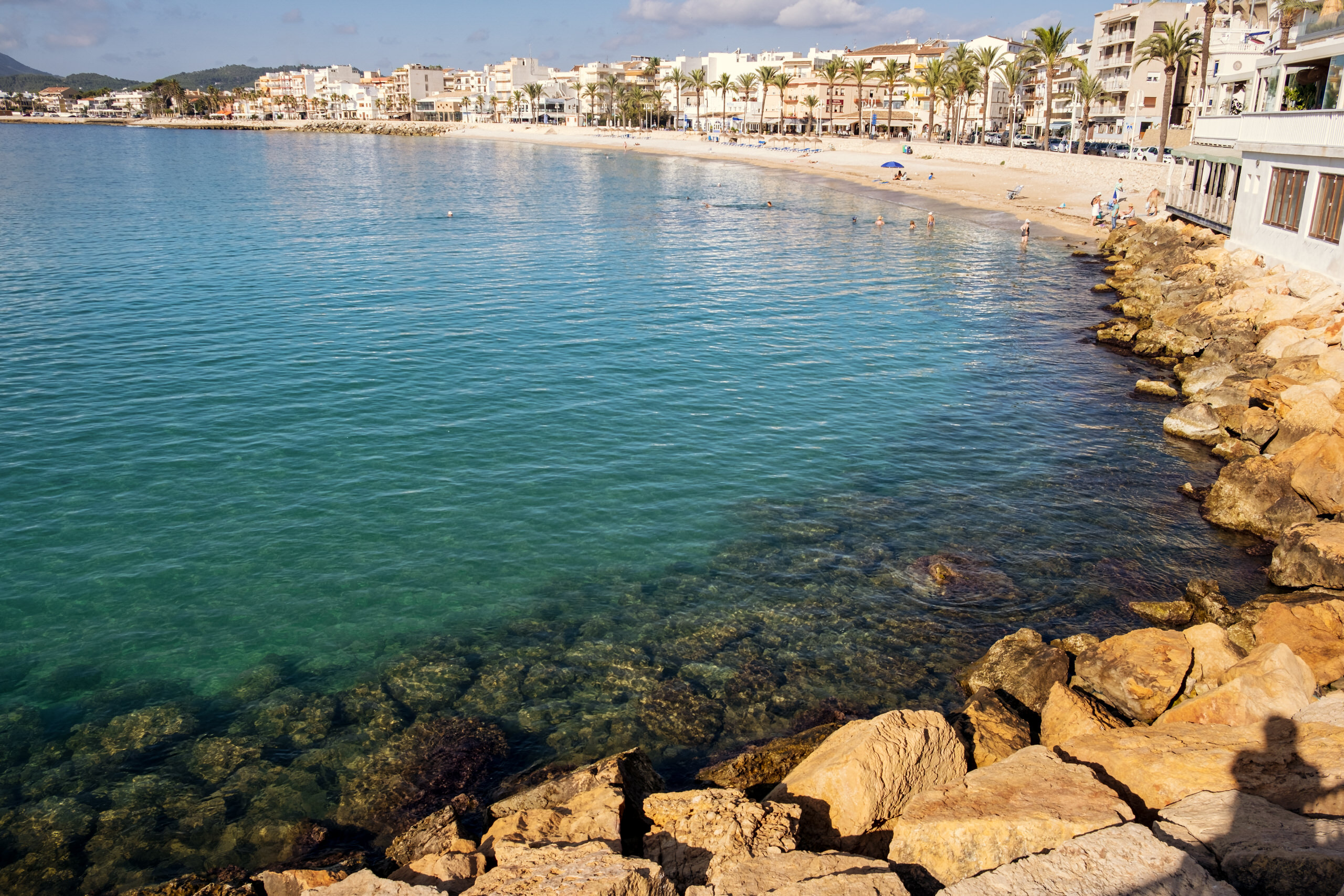
The second section of the route extends to the port of Xàbia. This stretch is about 8.7 km long and takes around 3 hours and 20 minutes to walk.
Here the landscape opens up. The sea lies open ahead and the Montgó accompanies the journey like a great mass of rock that organises the space between Dénia and Xàbia. This is a very suitable stretch for understanding the relationship between the Montgó Natural Park and the coast, and also for appreciating the sense of passage between two localities historically closely linked by sea and land.
Upon arriving at the port of Xàbia, the route can also become a gastronomic stop. The fishermen's quarter of Duanes still retains a very distinct identity and offers the perfect setting to rest, have lunch and continue the experience at a different pace.
Optional extra: from Dénia to Xàbia by boat
The same leaflet includes an option that is very much in keeping with the spirit of the route: to cover the stretch between Dénia and Xàbia by boat. The proposal indicates a crossing of about 4 miles and approximately 50 minutes.
This option offers a different perspective on the same landscape. From the sea, the cliffs, the profile of Montgó and the coastal inlets are perceived in a different way. The frontal view of the cliffs helps to understand the true scale of the coastline and gives the experience a very appealing continuity.
Xàbia
Stage 3: from cove to cove along the Cap de la Nau road
The next part of the itinerary runs through Xàbia. In this case, no single fixed distance is set, as it is an adaptable route designed to combine stretches by vehicle with short walks to the main points of interest.
This is a very visual part of the experience. The coastline of Xàbia is home to some of the most photogenic landscapes in the Marina Alta: open viewpoints, headlands jutting into the sea, small, tucked-away coves and exceptionally clear water. It's a day for stopping off, visiting a cove, observing the changing light on the rock and realising that the coast is not homogeneous, but rather a succession of very different landscapes and exposures.
Furthermore, this central part of the route ties in well with the general idea that MACMA's tourism website projects about the region: a Marina Alta “clothed in green and blue”, in which the landscape and the sea form a single scenic system.
El Poble Nou de Benitatxell
Stage 4: from Cala Moraig to Cala Llebeig to the Barranc de la Viuda
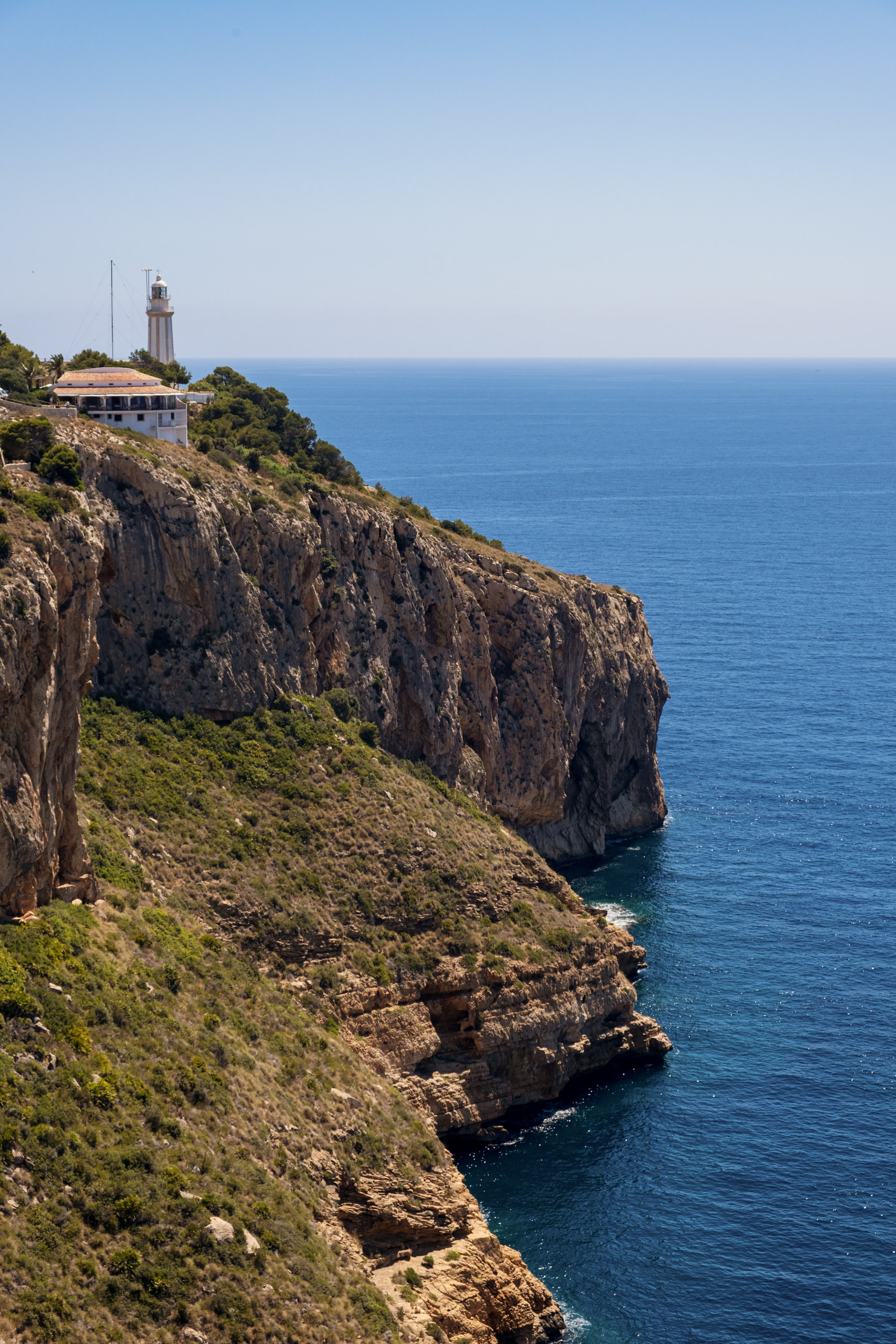
The final major leg of the experience takes us to the cliffs of El Poble Nou de Benitatxell. We suggest the route from the Cala Moraig car park to Cala Llebeig and the Barranc de la Viuda, covering approximately 6.8 km there and back and taking around 3 hours and 50 minutes.
This is probably the most intense segment of the entire route. The path runs along some of the most impressive cliffs on the Valencian coast. MACMA's information on the Cliffs Route details the route: the path begins at the upper area, climbs up steps and continues to follow the white and green waymarkers; from there you get views of Cala Moraig and proceed towards several caves and points of interest before descending to Cala Llebeig.
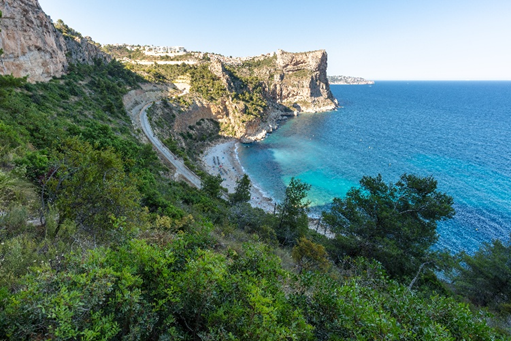
Among the elements featured in MACMA's description are the Morretes Cave, the Tio Domingo de l'Abiar Cave and the final descent to the cove, a point that requires caution as the terrain can be slippery. The same entry highlights Cala Llebeig and several caves linked to the traditional use of the coastline as main points of interest.
This stretch perfectly captures the essence of the entire experience. The sheer rock face, the caves, the old fishing coves and the constant presence of the sea allow one to understand the coastal landscape of the Marina Alta as a fusion of nature and memory. Benitatxell is not just a coastal postcard: it is also a territory marked by place-names, caves, remains of ancient occupation and forms of survival linked to the sea, as MACMA itself summarises in the municipality's profile.
*This experience is designed to be done in four stages, corresponding to four different days. We suggest some routes, but each person can adapt the experience to their abilities, physical stamina and interests. If you would like more information or places to visit in each town, you can visit the Descobrim la Marina Alta website and adapt the experience to your own tastes with your rucksack.
AND MORE. At the table and in bed at the first cry.
 Where to buy |  where to eat |
 where to sleep |  Activities and others |
Translated with DeepL.com (free version)