Through this experience we aim to showcase sites of democratic memory in the Marina Alta, that is, places where historical events related to the Civil War and the Franco era took place. Specifically, we will visit Pego, Benissa, Gata de Gorgos, Xàbia and Dénia. The Civil War is a little-known period, especially among the younger generation. Many of us are even more familiar with historical events from other places. We know the names of concentration camps thousands of kilometres away, we know stories of distant wars, yet we ignore the secrets that our own stones hold. We walk, without realising, upon the vestiges of our own past. It is sad to think that, on any given Saturday, we go to lively bars with dancing, music and happiness, without being aware that less than a century ago those very same walls were prisons. That those walls were mute witnesses to abuse and death. We often think of History as something that happens in books or in faraway countries, as if the events of the Civil War or the Franco era had occurred in another dimension. With this experience, we want to break this dynamic and, through imagination and empathy, reconstruct scenarios in our minds. When visiting any of the places suggested below, you should try to put yourselves in the shoes of the contemporaries. For example, that of families taking refuge during a bombing raid, imagining the darkness of the tunnel, the silence broken by the loud noise of the planes and bombs, the fear, the cold, the hunger, and the uncertainty of whether everything outside will be the same as before.
We must be able to empathise and to think that the very ground we are walking on already existed at the time of the Civil War. Places have a memory, even though we tend to forget it. In this experience, your gaze will be the link between the past and the present. We aim not only to understand what happened, but to feel that those who suffered misery and fear were people just like us, walking down these very same streets. We're sure you think you know your town well, but through this experience, you will discover places and stories you never imagined.
A LITTLE HISTORY. We know where we come from to decide where we are going.
The Spanish Civil War (1936–1939) was an international conflict, as alongside the Nationalist side Hitler and Mussolini took part; and on the Republican side, Stalin and the volunteers of the International Brigades. It began with the 18 July coup d'état against the Republican government, leaving Spain divided into two opposing blocs. Before delving into the military aspects, one must understand the events that preceded the conflict.
At the time of the coup d'état, the Spanish government was a democratic republic, which had been proclaimed on 14 April 1931, following elections in which people voted to end the corrupt and deficient monarchy of the time. During the new republican regime, fundamental reforms were attempted, particularly in the areas of agriculture and the redistribution of wealth, in order to create a fairer society. These efforts clashed with the interests of those who wanted to maintain the traditional inequality in the possession of economic and social power. The most privileged members of society felt threatened, while the new government raised hopes among the humbler classes.
The fierce opposition of the right and the hostility of the far left, which believed the republic was merely an instrument of the bourgeoisie, ultimately weakened the regime. The army began preparing a conspiracy for a coup d'état, which it intended to follow up with a military directorate. The February 1936 elections, in which the united Republican left on the Popular Front won, accelerated the conspiracy, with the coup taking place on 17 July in Morocco and on 18 July in the rest of the peninsula. It did not quite work, and Spain was divided into a zone that supported the Republic and another that had been forcibly conquered by the military. The first 24 hours of the coup were decisive for the consolidation of the two sides and the start of hostilities. The military acted in a very violent and bloody manner, leaving thousands dead in their wake, not only in places where they were met with resistance, but also in places where the coup had initially succeeded.
First phase: from July 1936 to March 1937. On 18 July 1936 the Army of Africa, led by Franco, crossed the Strait of Gibraltar. In Andalusia, Queipo de Llano occupied Seville and western Andalusia. General Mola asserted his authority over Aragon, Navarre, Castile and León, and Galicia.
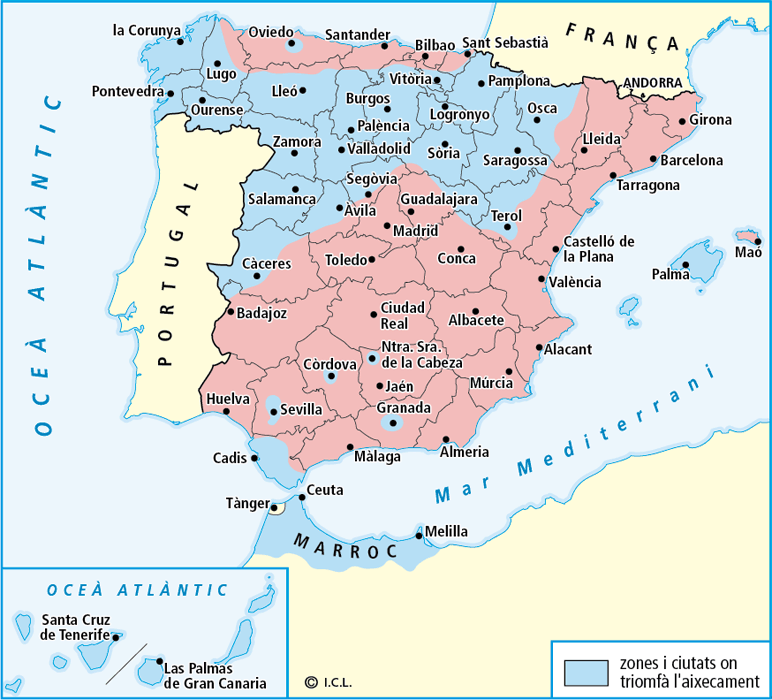 In blue, the places where the uprising triumphed.
Later, the rebels captured Badajoz and their main objective was the occupation of the capital, but the Republicans defeated them in the battles of Jarama and Guadalajara, thus preventing their arrival in Madrid. Therefore, the rebels had to change their strategy.
Second phase: from April 1937 to November 1938. The rebels launched the Northern Campaign to conquer the Republican zone that had become cut off from the rest of Republican territory. It was during this period that the German Legion Condor bombed the city of Guernica. At that point the Republicans launched the Aragon offensive and captured Teruel, although they soon lost it again. The rebels wanted to reach the Mediterranean to divide the remaining Republican territory and occupied Vinaròs in 1938. The Republicans launched the Ebro campaign to reunite the territories, but were defeated.
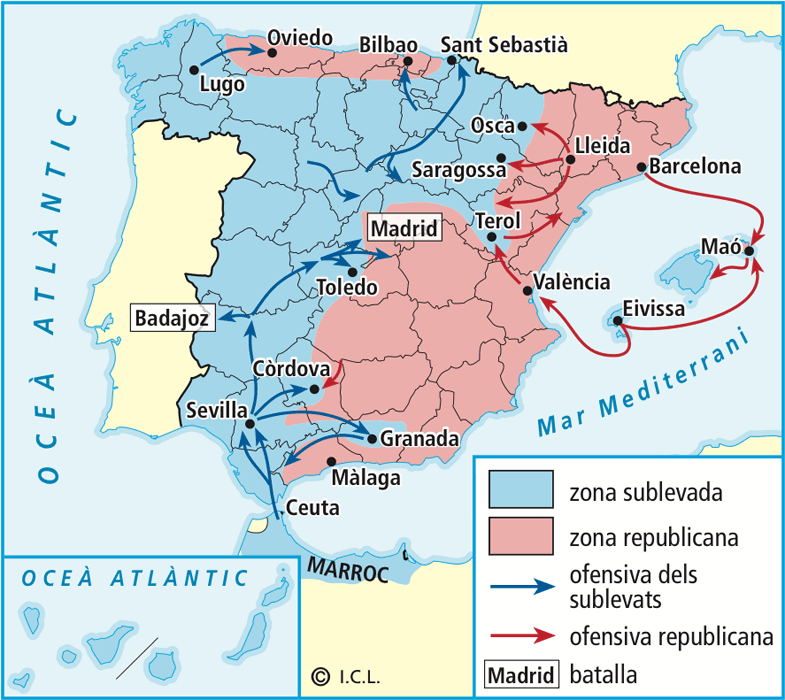 Battles.
Third phase: from December 1938 to March 1939. The rebels launched the offensive in Catalonia and captured it. They then advanced on Madrid, which fell under their control on 28 March. On 1 April, the war was declared over.
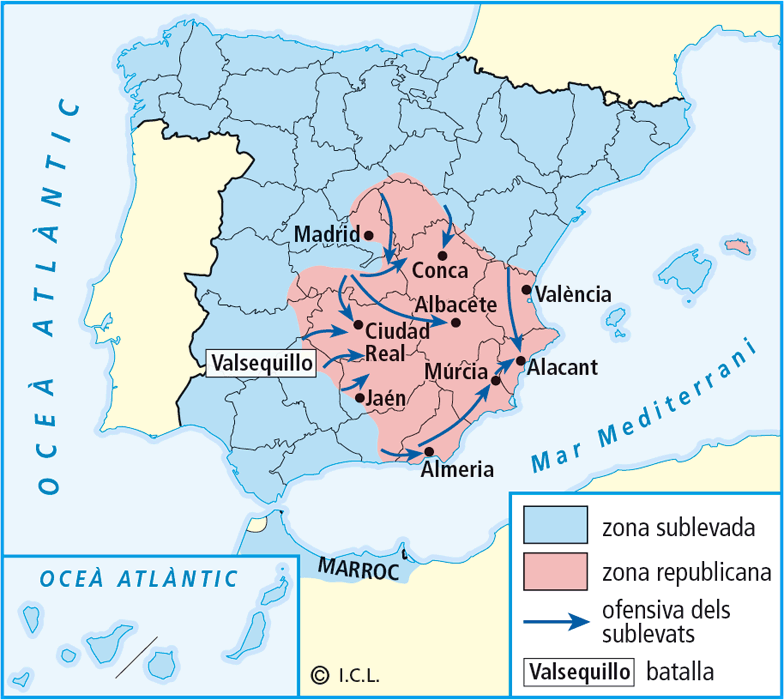 The last battles.
International aid was decisive for the course of the war. Portugal, Italy and Germany supported the rebel side, providing them with many human and military resources. The Republic received very limited assistance from the USSR and Mexico, because the European democracies had signed a non-intervention pact. But from these countries volunteers enlisted in the International Brigades, who came to defend democracy.
As can be seen in the maps, Marina Alta was assigned to the Republican rear area, that is, away from the front. Nevertheless, many young people enlisted and went to fight in the conflict zones. Being far from the front, many refugees arrived from other areas, especially children and youngsters from Madrid who were in great danger for being in the capital, which was the main target of the rebel side. They were taken in by private individuals or stayed in buildings set up for this purpose. For example, in Dénia the Hogar Sueco was created, staffed and supported by Swedes who looked after the children.
Later in the war, the coastal towns feared bombing raids and, for this reason, shelters were built, such as the tunnel in Denia castle, and the coastline was fortified with anti-aircraft batteries.
As for repression, during the war we find two types: institutionalised and uncontrolled. The first is that which occurred on the rebel side, as the orders received by the military were to put an end to any sign of dissent. The second was carried out by left-wing extremist groups, who targeted people they suspected of being right-wing. In our area, “La Pepa's” car (from the far left) went on “paseos” with the aim of murdering anyone they found to be opposed to their ideas. On 2 November 1936, what is known as the “Night of the Abyss” took place. According to Rosa Seser, Pepa threw 15 residents of Dénia into the Montgó abyss: religious figures, lawyers, industrialists, bankers, among others. It should be noted that not all sources agree on the number of victims, with figures ranging from 13 to 21. It was a “saca”, that is, people were taken from the municipal prison in Dénia to be murdered.
Once the war had ended, the new dictatorial regime began to apply extreme repression aimed at eliminating anyone who might oppose it: many civil servants were removed from their posts, those figures who had held important positions during the Republic were imprisoned, and many others were executed. For this reason, in our region we can find concentration camps, mass graves and execution walls with bullet marks.
Moreover, the Republicans who crossed the border into France were held in French concentration camps until 1940, when France was occupied by Nazi troops. All these prisoners were transferred to German concentration camps. From Pego, five men died at Mauthausen, and of the five Denians there, four died. Those who survived were never able to return to Dénia.
With this experience, which combines urban and hiking routes, we will discover these important places of democratic memory from our past.
Tips for the routes
- Wear comfortable footwear and bring water.
- Respect nature and architectural remains.
- For more information, please consult the tourist information offices.
SUGGESTED ITINERARIES. Step by step, we make our way.
Pego
Stage 1: Municipal Cemetery - Library - Market Square
The first stop of this month's experience will be Pego. Since 1932, the mayor of this town had been the socialist Aquilino Barrachina, who was later executed by firing squad in Alicante. Today, there is an avenue named after him. Many of the town's residents went to the front, and the first to be killed on the front line was in December 1936. Immediately, children began to arrive from the capital, Madrid. For fear of air raids, the streetlights were turned off at night as a defence measure. On 31 March 1939, the Town Hall was taken over by Commander Agustín Navarrete Montoro and members of the FET and the JONS, bringing the Republic to an end in Pego.
The first stop will be the municipal cemetery of Pego, where there are two mass graves and a monolith in memory of the victims of the war. In grave I, two bodies have been identified, victims of the Francoist repression after the war had ended. In Fosse II, 11 have been identified, victims of repression in the Republican rear area during the first months of the war. More information about these fosses can be found at the following links:
Fosse I information
Fosse II information
On this portal you can find a great deal of information, including the names and occupations of the people who disappeared and were identified during the exhumations. When we walk through the cemetery, we won't see anything out of place or any evidence of the mass graves, but we must use our imagination and be mindful of the stories from the past that this place conceals. Afterwards, we can walk past the current town library, which was formerly the school. This building sheltered many children who had to flee their homes for their own protection, even leaving their families behind.
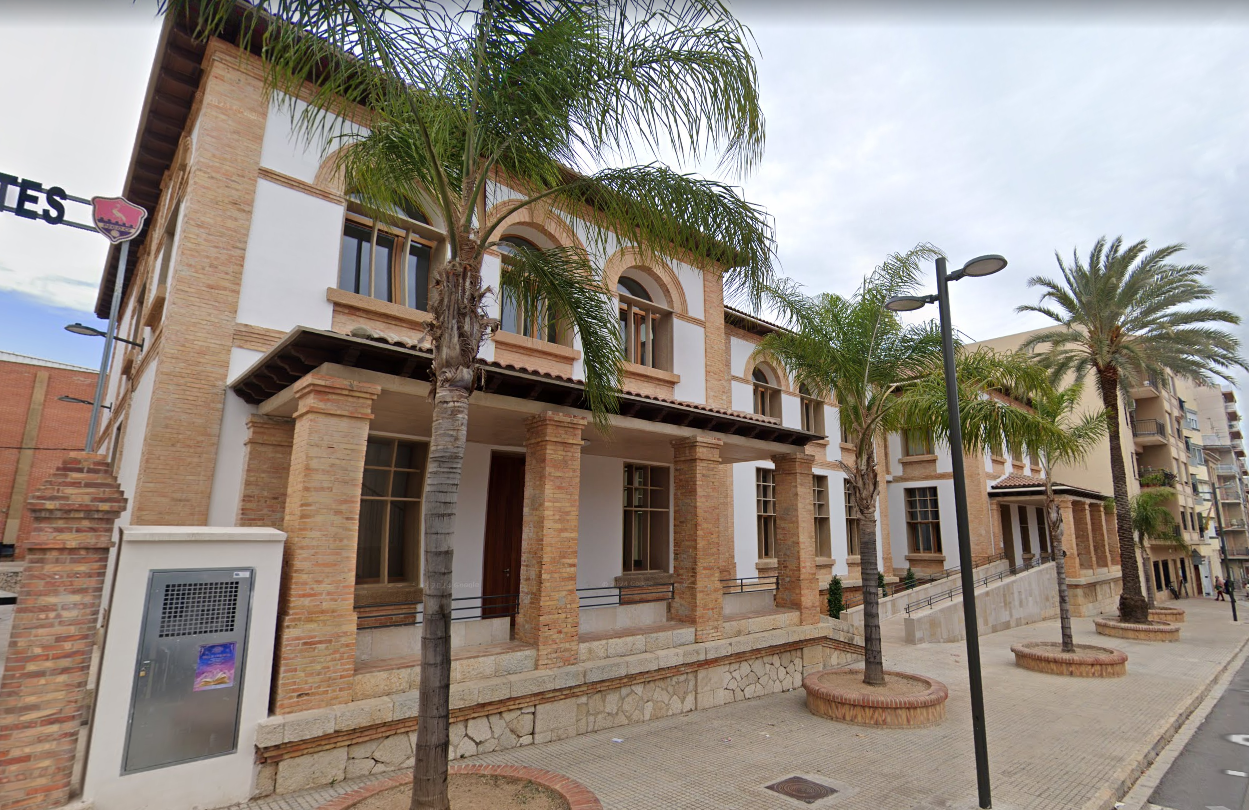 The library.
The final stop is the present-day Market Square, where we find several points of interest. The first is the convent, which also served to accommodate evacuees from other areas during the conflict. Also, next to the convent, there is an entrance to an underground car park. This site was used as a prison once the war had ended.
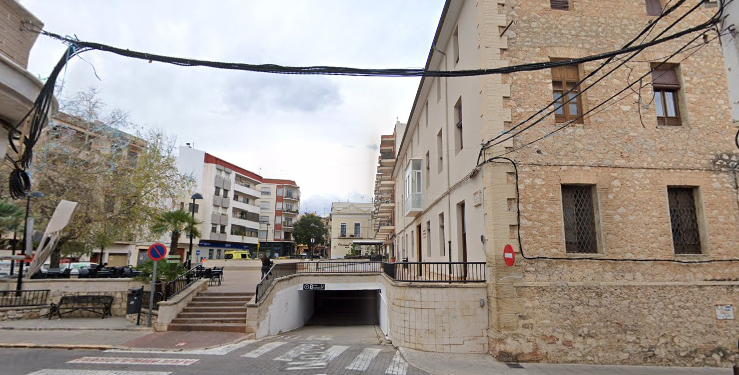 The car park.
In the following photo, we can see some children in the square, posing in front of a now-vanished kiosk.
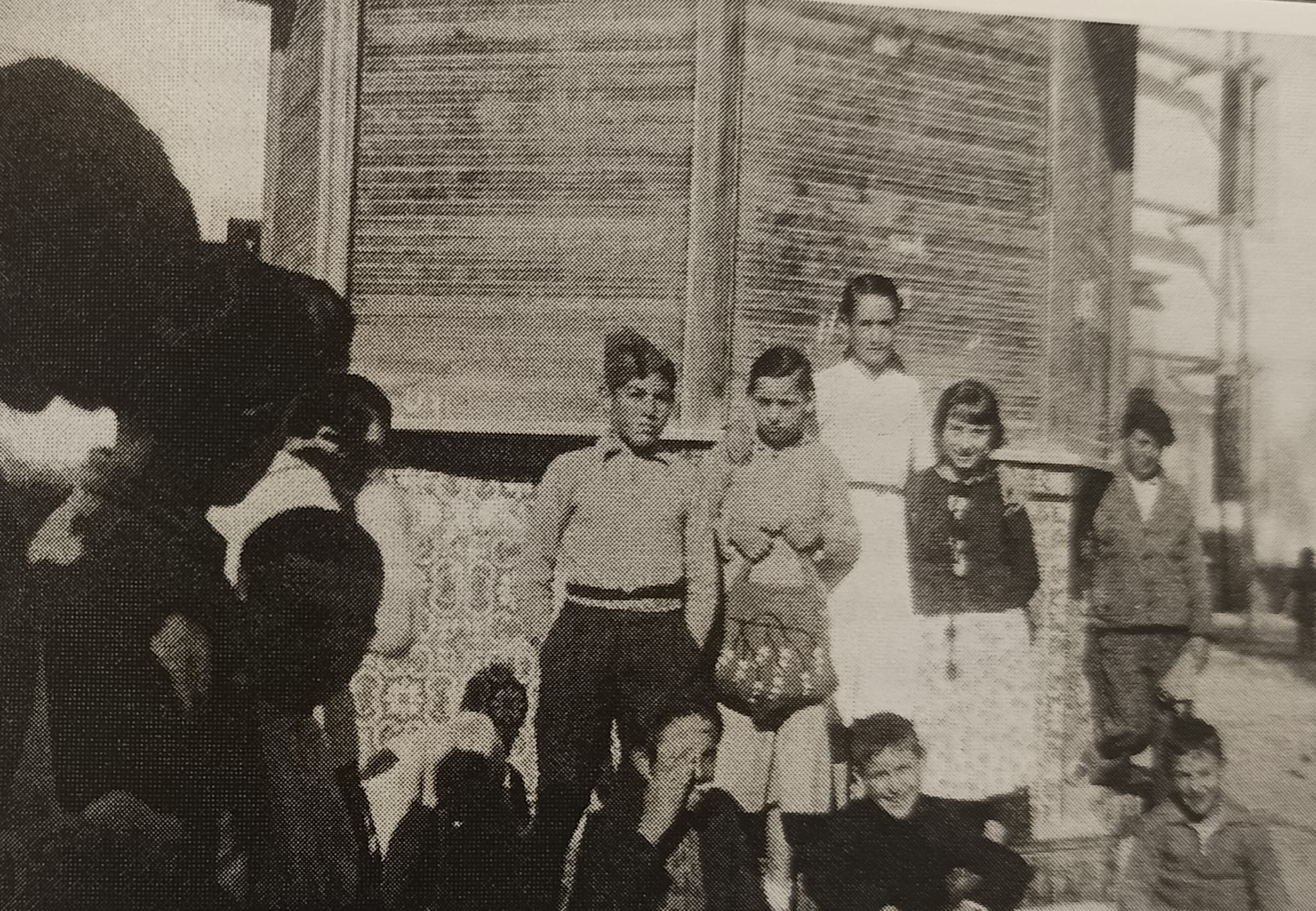 Some children during the war.
I would also like to talk about the Municipal Theatre building, which we can see in the following photo as it appears today. This building, before the war, was the “Cine Teatro Pathé”.
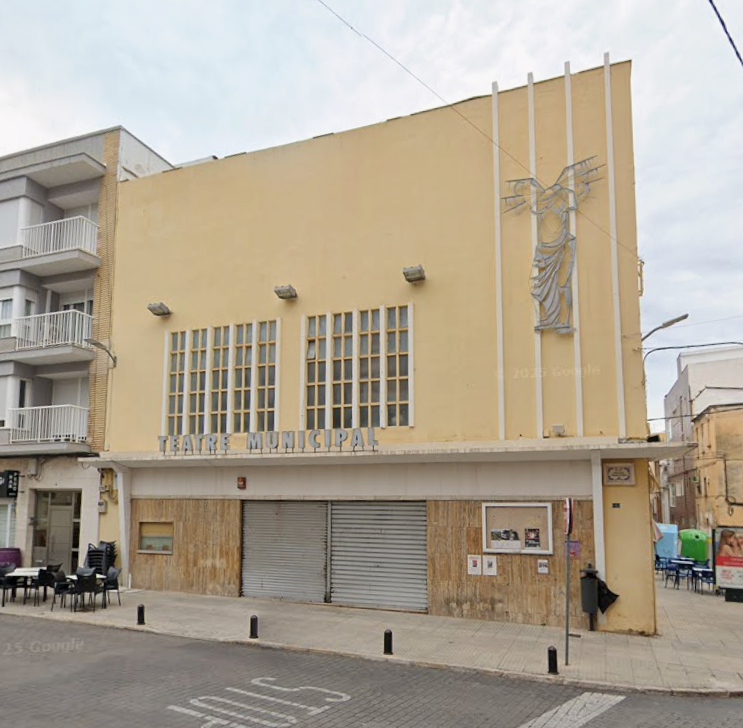 The theatre today.
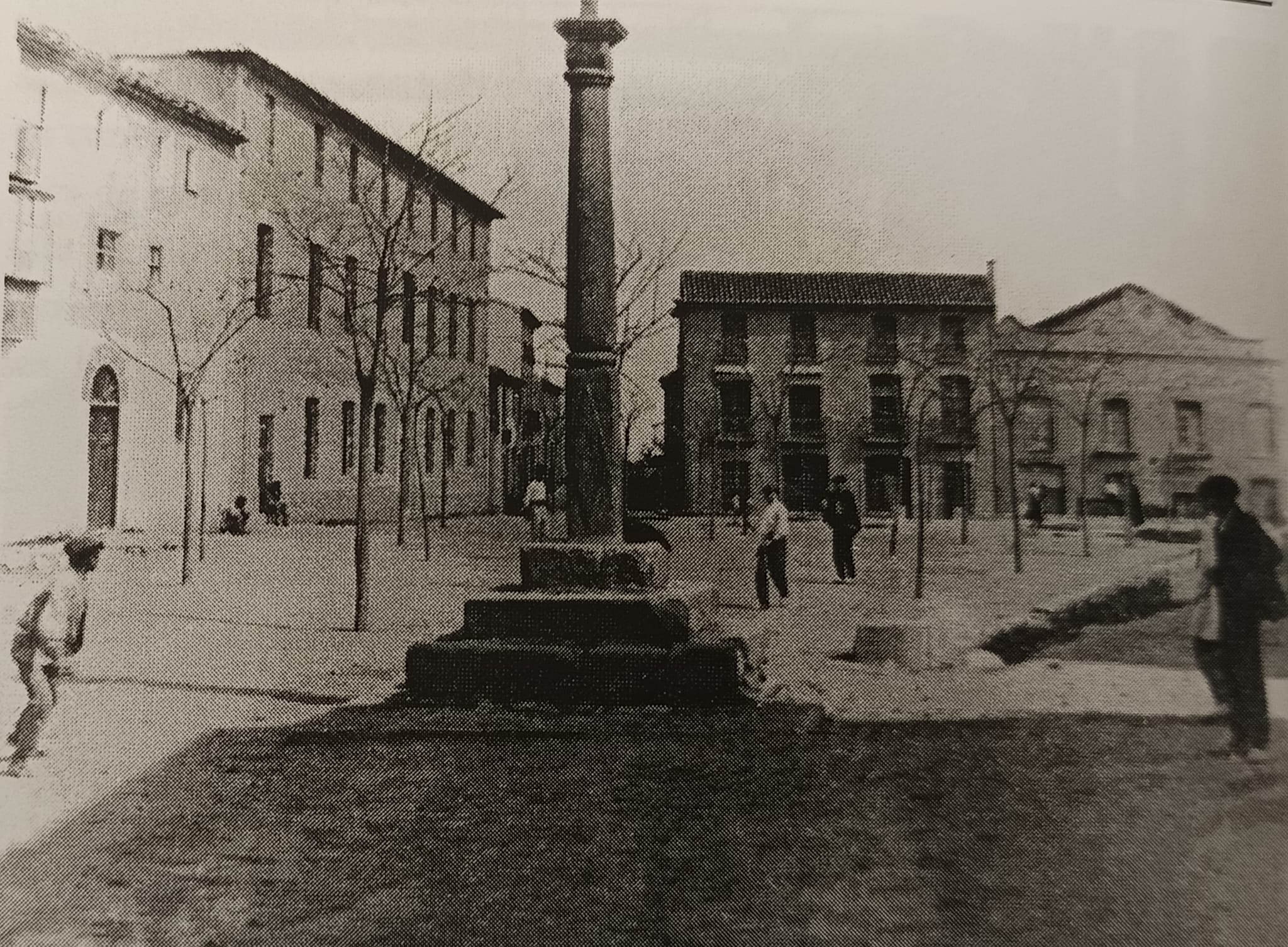 The square before the war, with the cinema building.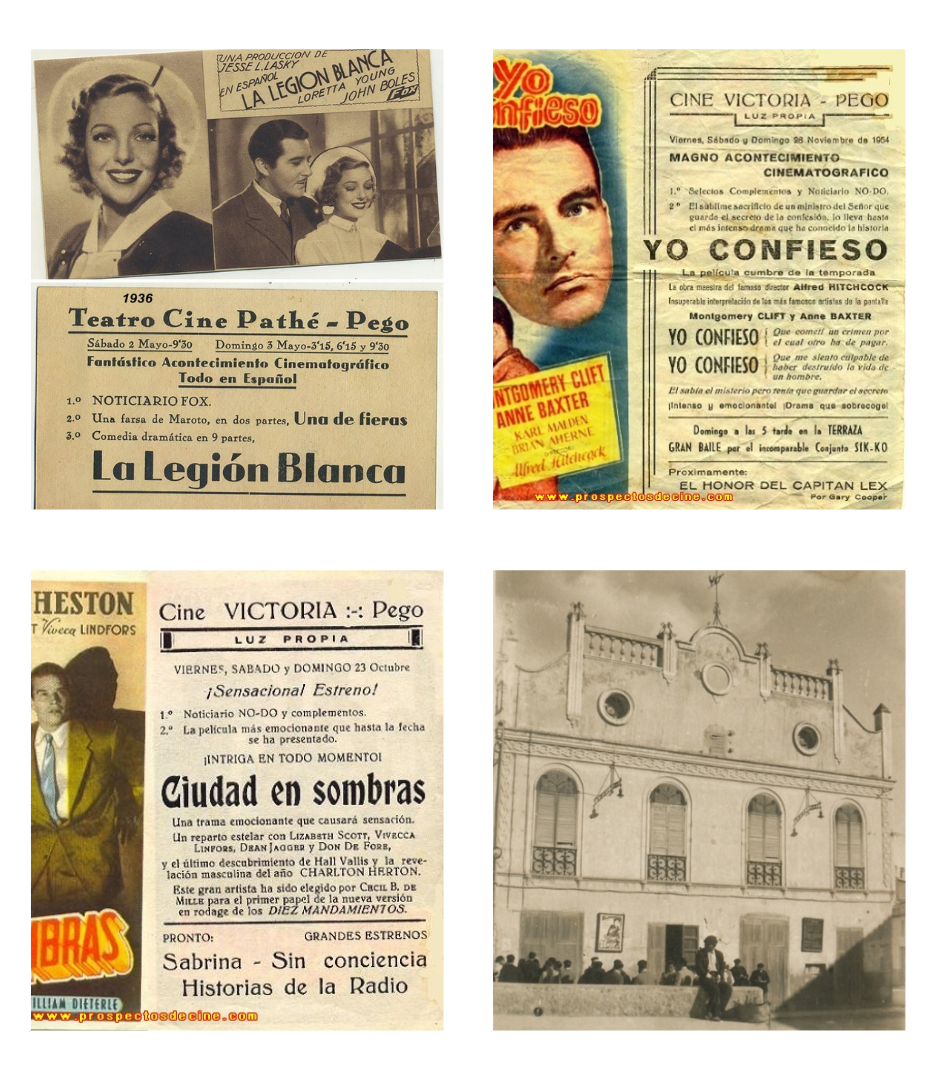
These images show programmes from the Pathé cinema (top left, pre-war) or the Cine Victòria, as it would come to be called after the war. We can see that the films shown after the war included the screening of NO-DO, a Francoist propaganda newsreel.
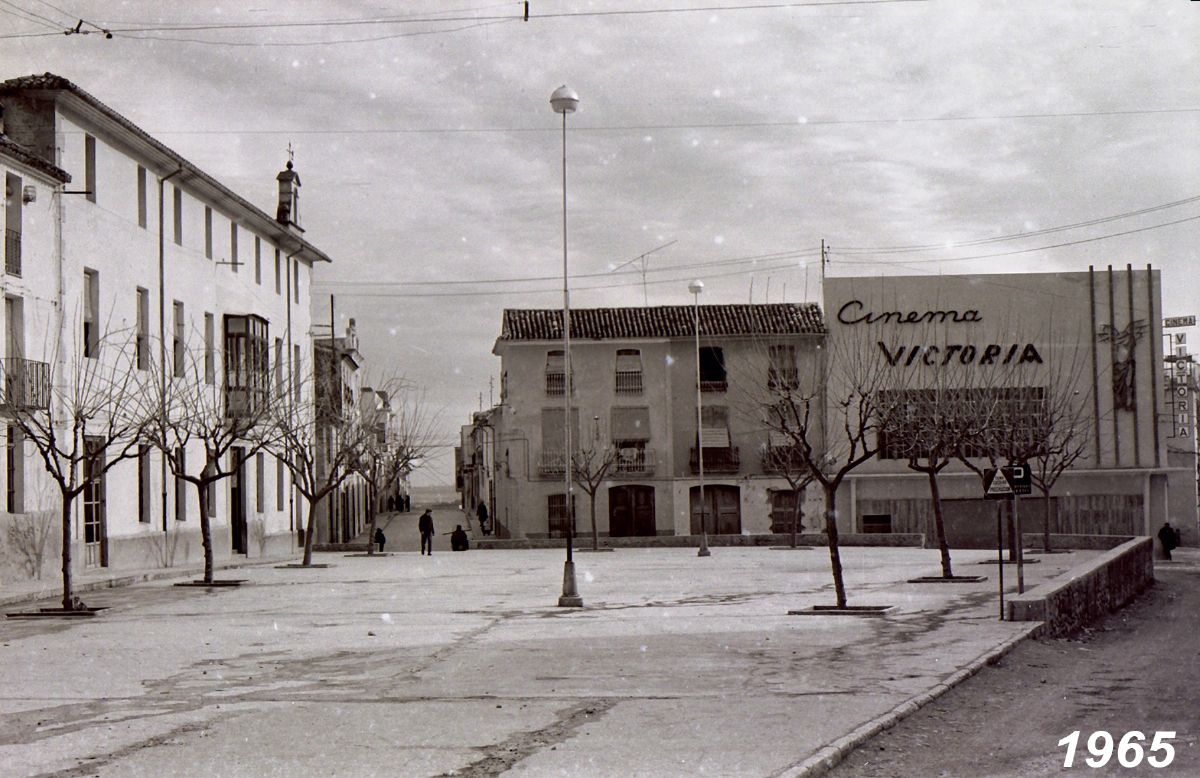
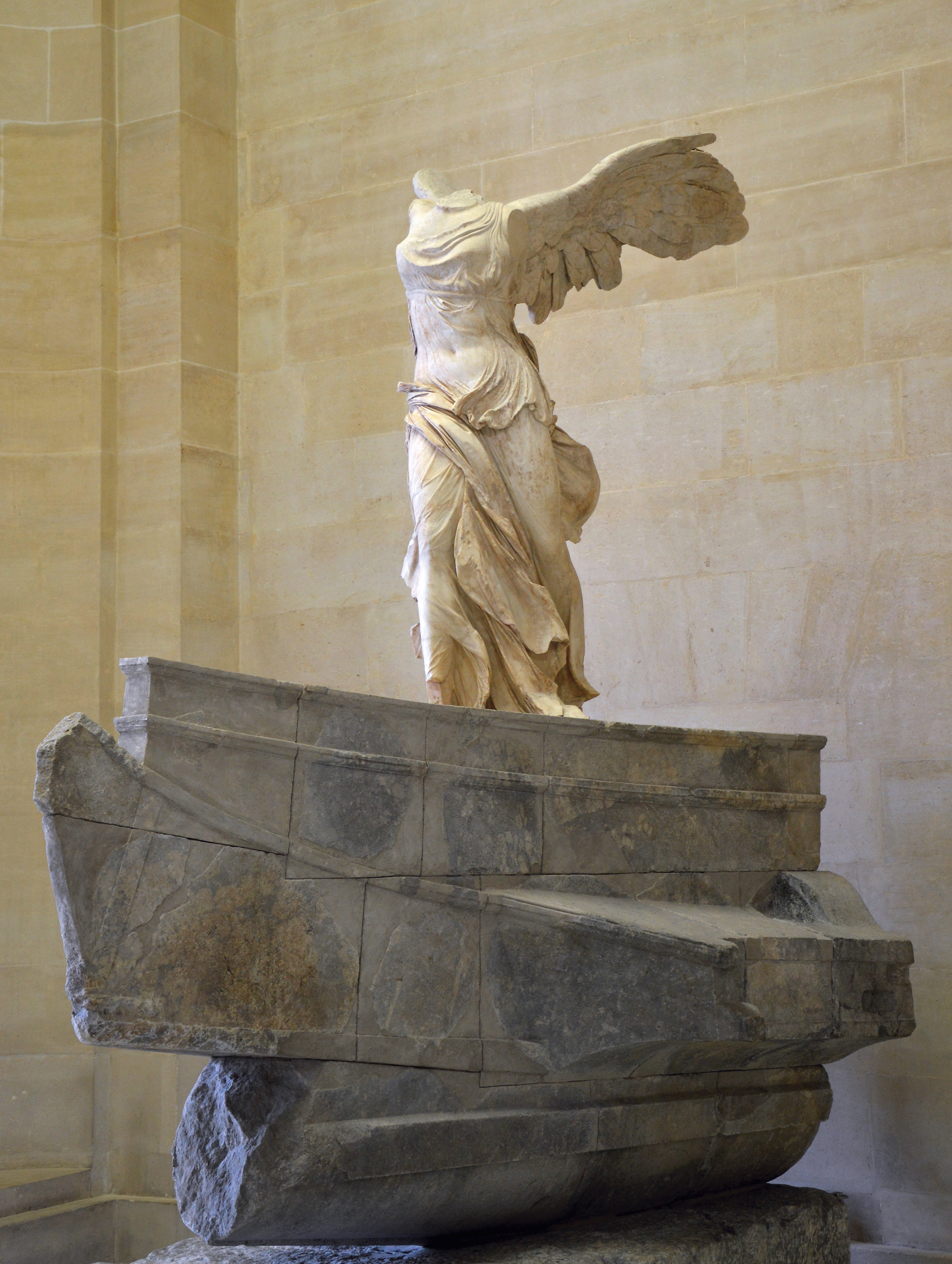
This image from the 1960s shows the cinema under its new name. If we compare it with the present day, the cinema building is quite similar, although its name has been changed to “Municipal Theatre”. However, the figure of the Greek statue of Nike of Samothrace, an allegory of victory in war, is still there.
While in Pego, it is well worth trying the local speciality, “crosta”, a traditional rice bake covered in beaten egg. You can also visit the Ethnographic Rice Museum. At the House of Culture, you can see the plaque honouring the five Republicans from Pego who died in Mauthausen. I recommend listening to the song “Tres de Pego” by the band Gossa Sorda, which deals with this subject. It is so titled because it was initially believed that only three men from Pego had died, but subsequent investigations concluded there were five. The band Reacció made a new version: “Cinc de Pego”.
Tres de Pego
Cinc de Pego
Benissa
Stage 2: cementeri municipal - convent dels franciscans - parc dels Internacionals - casa Feliu
As we have already mentioned, the International Brigades were volunteers from other countries who enlisted to defend the Republic. On 19 March 1937, in the midst of the Civil War, a small group of foreign volunteers were sent to Benissa (and also to Dénia) to set up the first leave centres for the International Brigades in Republican territory. In Benissa, this centre was established in the Franciscan convent, which also became a military hospital run by the medical corps of the Republican Popular Army once the brigadistas had departed. Another hospital for tuberculosis patients was established at Casa Feliu. On 9 April 1938, the International Brigades were evacuated to Catalonia. However, ten brigadiers died in Benissa: eight from tuberculosis, one from angina and the other in a road accident.
The first stop will be the new cemetery, as this is where the brigadistas who died during their stay in Benissa are buried. The second stop will be the old municipal cemetery, where the remains of Republican fighters, who had died in the military hospital, were exhumed. You will find more information in the following links:
Fosse I
Fosse II
We will continue our stroll around Benissa, and we can pass by the Franciscan convent which, as we have already mentioned, served as a rest and leave centre for the internationals and was also military hospital No. 10.
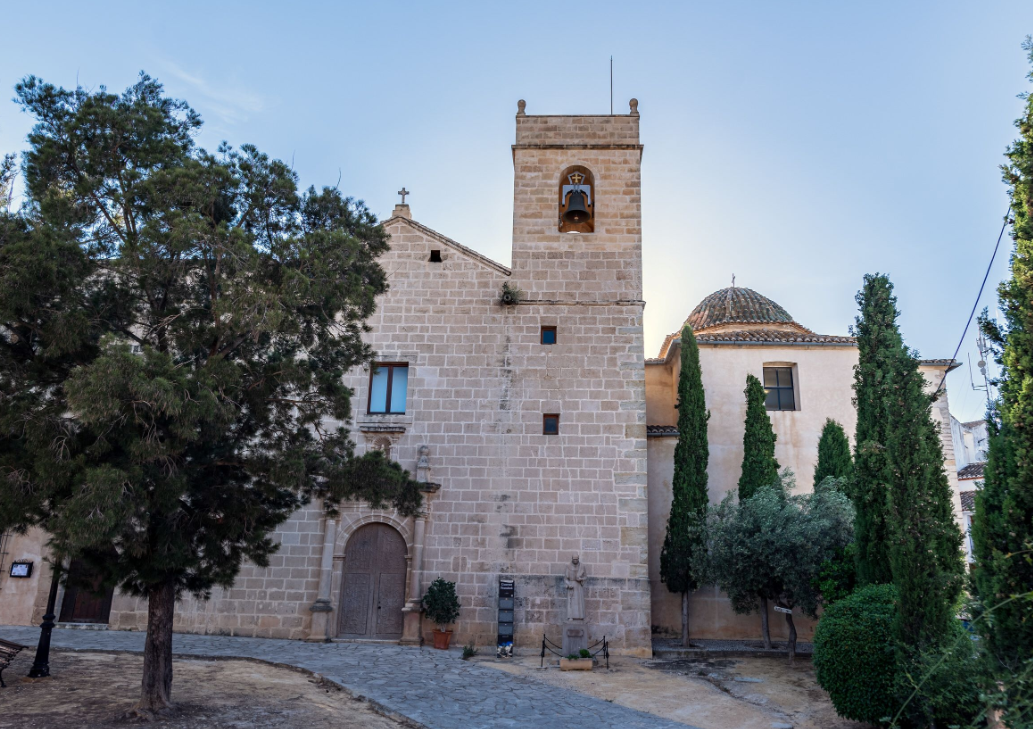 The Franciscan convent.
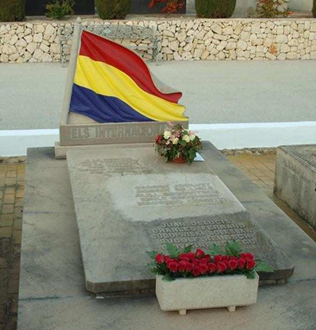
The final stop will be International Park, where we will also find the Feliu House. In this park we will find a monument in memory of the International Brigades, the work of Valencian sculptor Rafael Carrió. The monument's placement in this park is intended to recall the international hospital use of the Feliu House, in which the eight buried brigadistas of various nationalities died of tuberculosis.
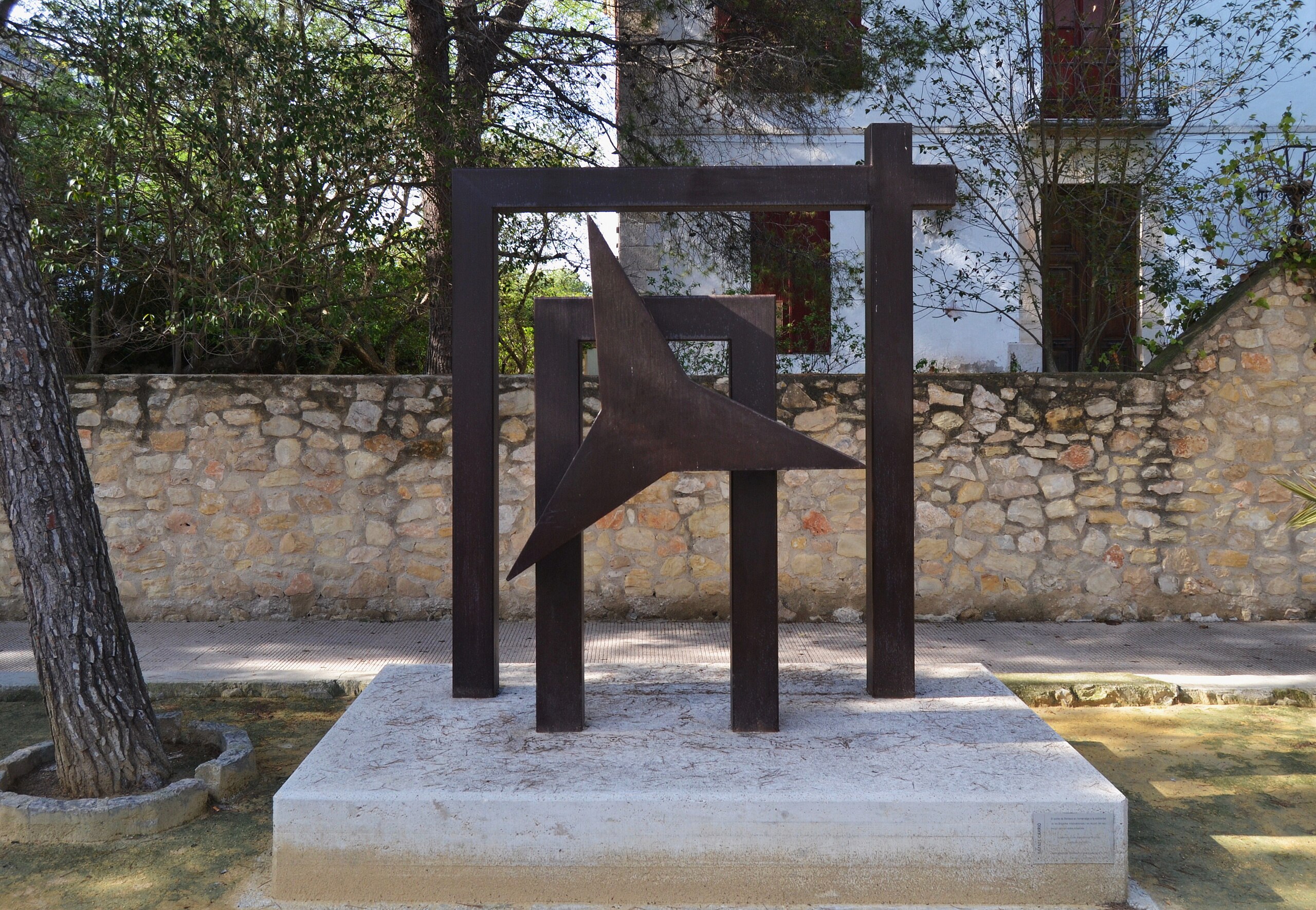 Feliu house and the monument.
Since we're in Benissa, we should try the typical cocas or octopus stew. We should also take the opportunity to visit the imposing Cathedral.
Gata de Gorgos
Stage 3: Hermitage of Christ of Calvary - Els Serrellars
In Gata de Gorgos we will visit the Hermitage of Christ of Calvary. It is located on the outskirts of Gata de Gorgos on an elevation called El Tossalet. Construction began in 1762, and it was consecrated on 12 February 1770. In 1886, the building was extended and enhanced, and in 1905 the bell tower was erected, at the same time as the chapels of the calvary preceding the hermitage were built. It is of interest for this experience because during the Civil War, it was converted into a hospital.
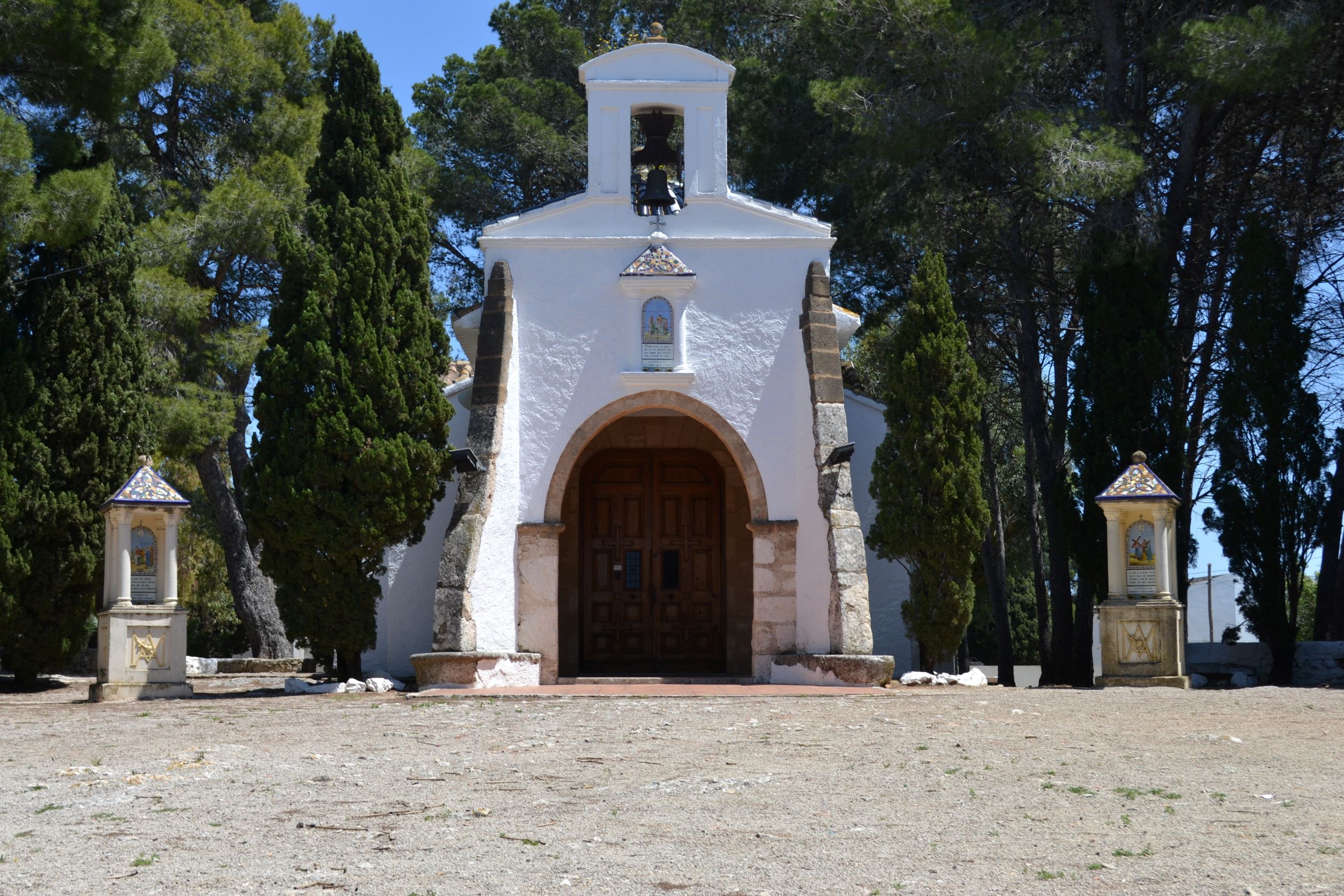 The Hermitage.
Another thing I would like to mention about this place is the legend of the “miracle of the white tree”. According to this legend, in 1812 during the French war, French troops entered the village, but found it deserted, as the entire population had taken refuge inside the hermitage. As the soldiers were climbing the mountain, they were dazzled by a white tree moving swiftly. The horses, along with the soldiers, fled in terror. In this way, the people of Gata were saved. This supposedly magical tree did exist, but unfortunately, it was felled during the Civil War.
The next proposed activity is a mountain trail through the Serrellars. It is a walk to enjoy nature and the mountain scenery, but also to realise that after the Spanish Civil War, some maquis hid in these very mountains we are now walking on. These were armed anti-Francoists who resisted once Franco's new regime had begun.
To finish, we could visit the old town and try a typical dish, such as blood with onion, at one of the village's bars. If we pass through the Old Square, we will see the church and, next to it, some houses that were formerly the palace of the Duchess of Almodóvar, an 18th-century Valencian aristocrat. Afterwards, we can head to Spain Square to visit the shops selling typical artisan crafts.
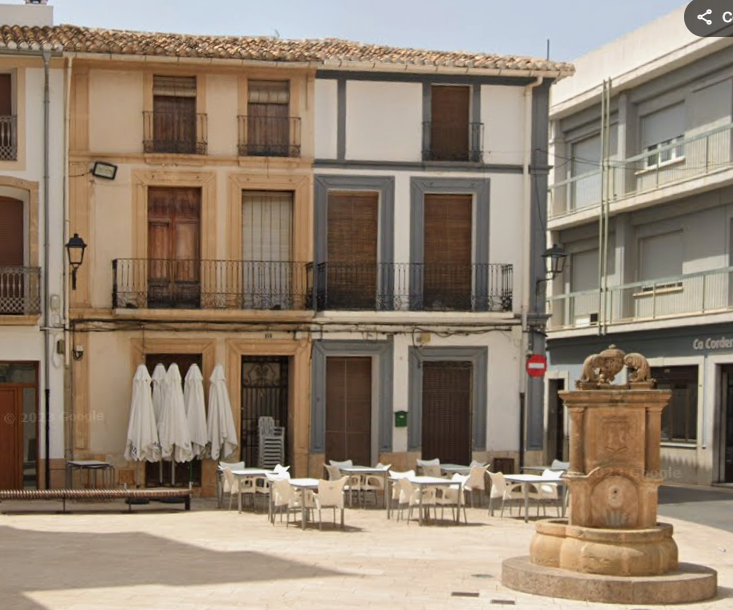 The two houses that were the palace of the Duchess of Almodóvar.
Xàbia
Stage 4: Convent Square - Bolufer House - Produce Market - El Moll Shelter - Anti-aircraft batteries from La Grava to the Arenal - Montgó Cave Route
To begin our visit, we will head into the old town of Xàbia, where the streets and squares have a special charm and where we can find architectural remains of great interest, such as the old ramparts, churches, convents, very cosy eateries, etc. We will start from the Convent Square, where the Convent of the Augustinian Nuns is located. Somewhere in this square, near Forn Street, there was an underground air-raid shelter. Regarding the convent, it should be mentioned that it is relatively recent, as it was built on a site where, before the war, the Convent of the Minims had stood.
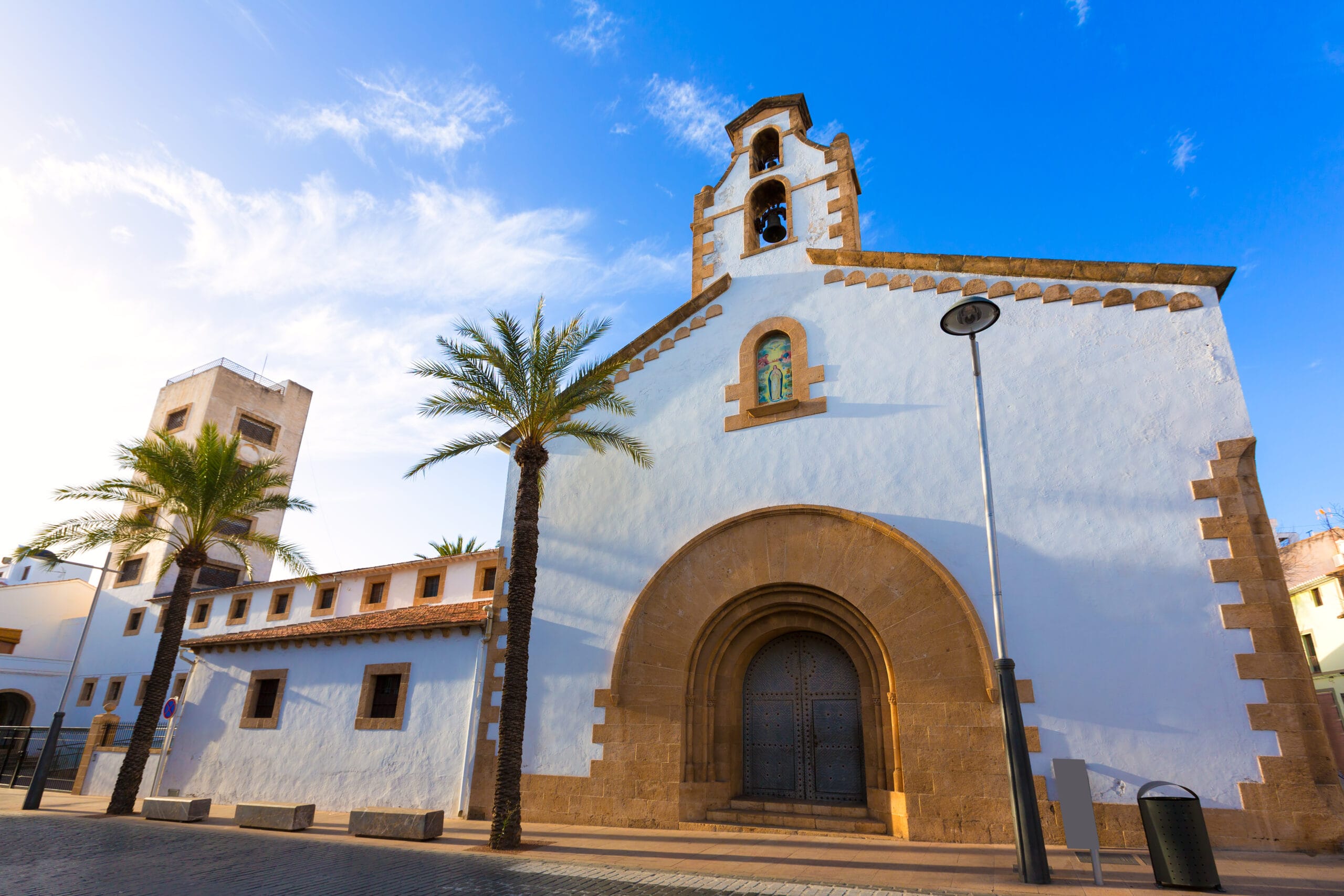 The Agustines convent.
We will continue our walk through the old part of the village and head to the square of the Church of Saint Bartholomew. The most notable building in the historic centre is undoubtedly the church and fortress of Saint Bartholomew, built between the 14th and 16th centuries, with extensions in the 18th and 19th centuries. The main structure is in the Isabelline Gothic style. In 1931, it was declared a National Artistic Monument due to its importance and significance. In this same square, we find the Bolufer House, a former home of the 19th-century Xabienc bourgeoisie. This spectacular building, both inside and out, was used as a hospital during the war. Its owners did not wish to move back in once the conflict had ended, and it has remained uninhabited ever since. It is now being renovated to become a hotel.
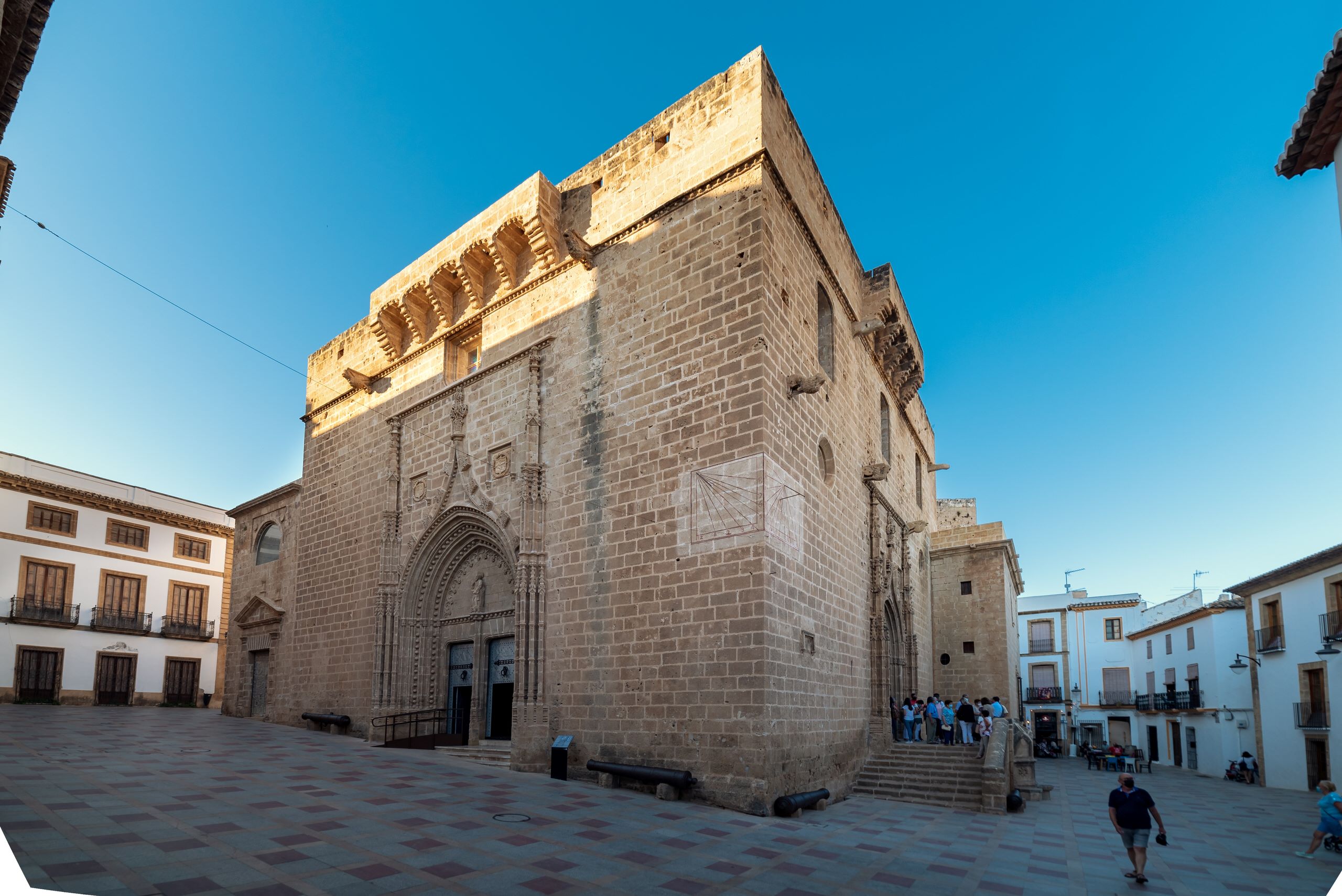 The church and the Bolufer house on the left.
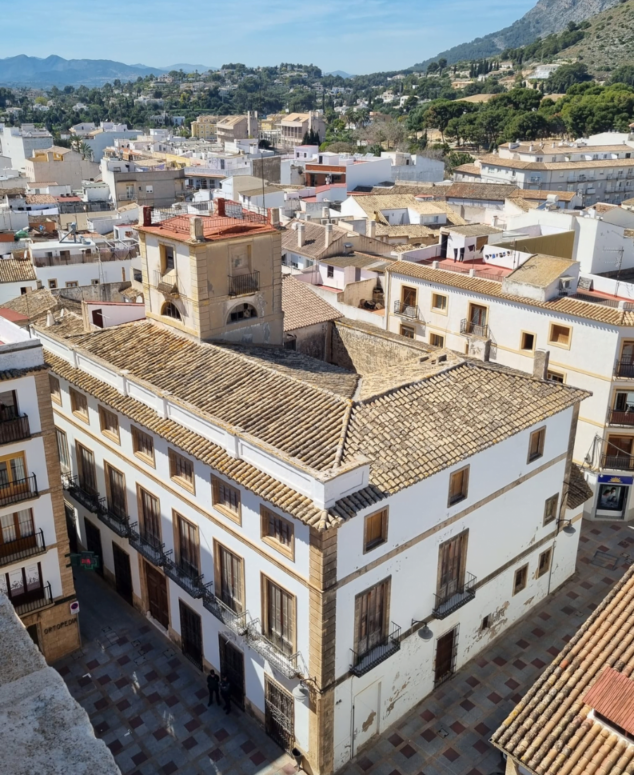 The Bolufer house from above.
Next to this building we will find the municipal market. This space was the Convent of the Augustines before the war, but in 1936 it was destroyed to make way for a covered market, which was not inaugurated until 1946. As we have already mentioned, the Convent of the Augustines was then moved to its current location.
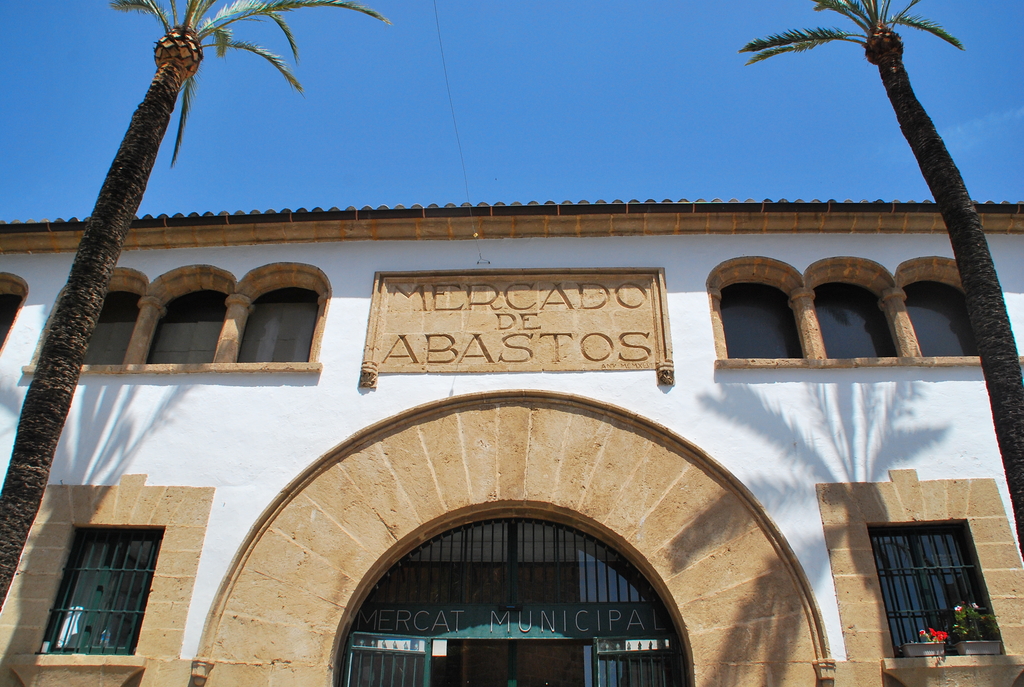 The market.
We will continue to the Customs Quarter of the port to visit an air-raid shelter, which has recently been discovered not to have been used as such, but as a munitions store. It is a little difficult to find because it is hidden by a wall and vegetation.
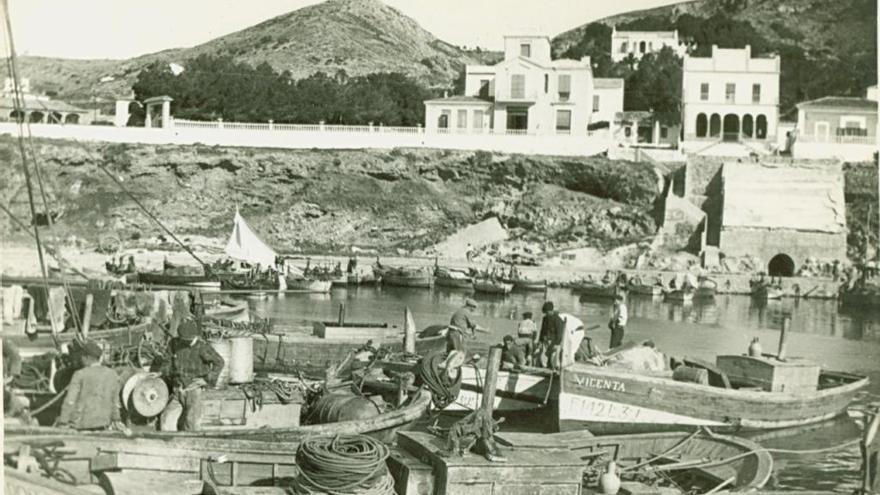 The port and the shelter on the right.
Currently, this entire area in the image is built over and the water no longer comes so close to the shelter. Unfortunately, its condition makes it impossible to open for visits, but with the following virtual tour we can see what the interior tunnels look like:
Moll Shelter Tour
The location of this structure is where there is now a car park, opposite the harbour entrance. In the following image we can see where it is, with the same side steps leading up to the same old houses from the first photo.
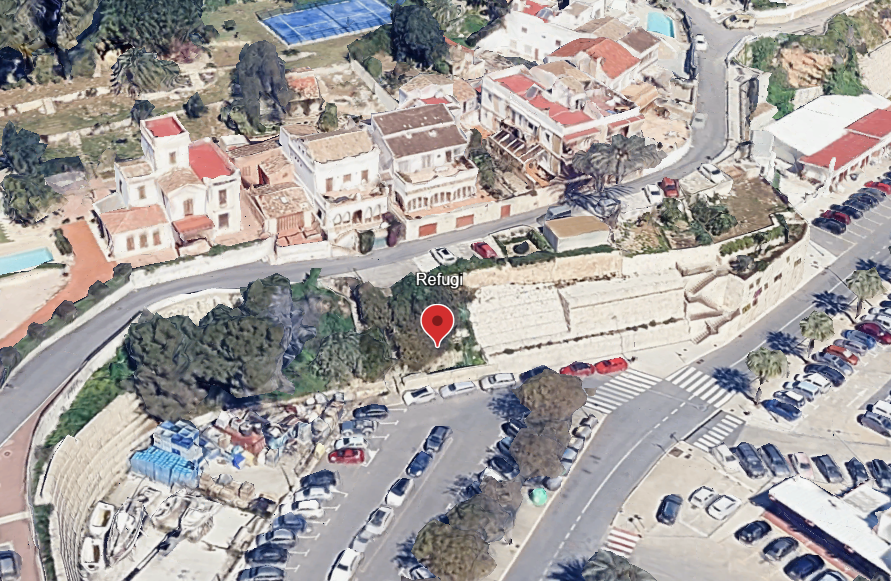 The location.
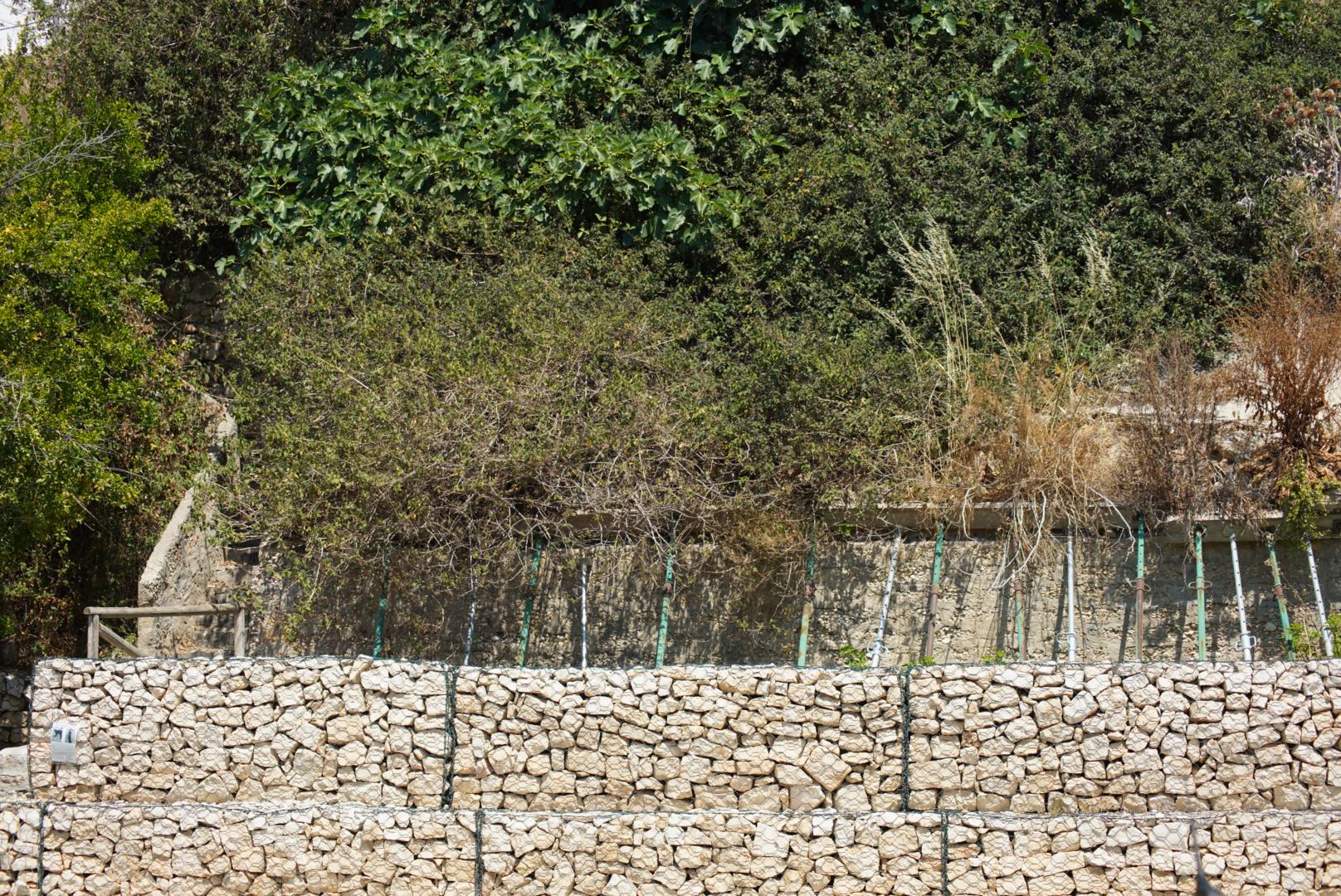 The shelther behind the wall and vegetation.
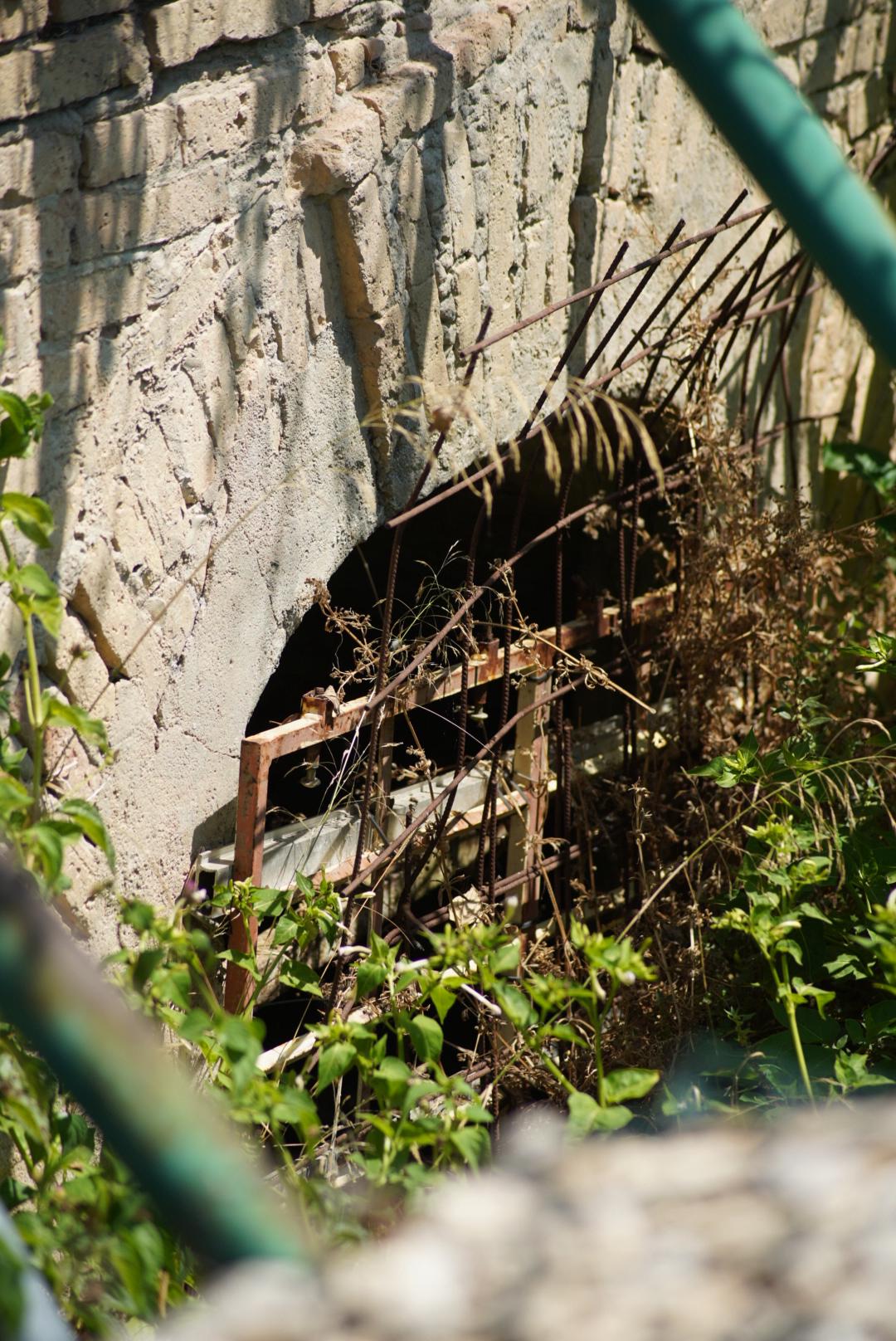 The entrance.
From where we are now, we will head towards Arenal Beach, passing through Grava Beach, Benisser Beach, Muntanyar and Cala del Ministre (Arenal). This entire area was prepared in case of a bombing, with several anti-aircraft batteries. No remains of most of them are left, but the one at Muntanyar has its foundations, which are excavated and marked out. It's a shame because, in the 1980s, this one was in perfect condition, but it was demolished.
We will start with an anti-aircraft battery that was located next to the present-day Cala Bandida. Apparently, no material remains exist.
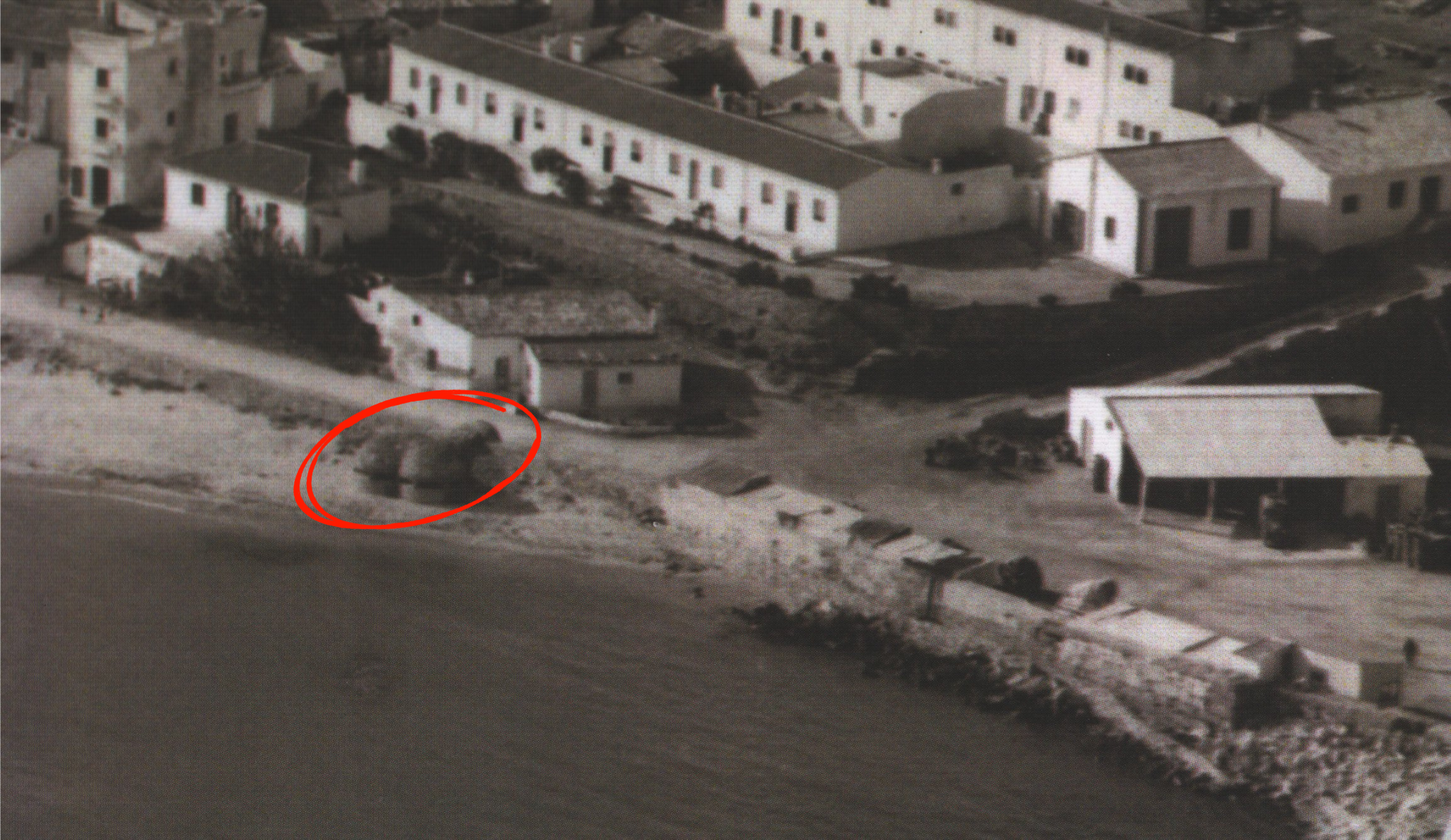
It should currently be found more or less in the area marked with the red circle.
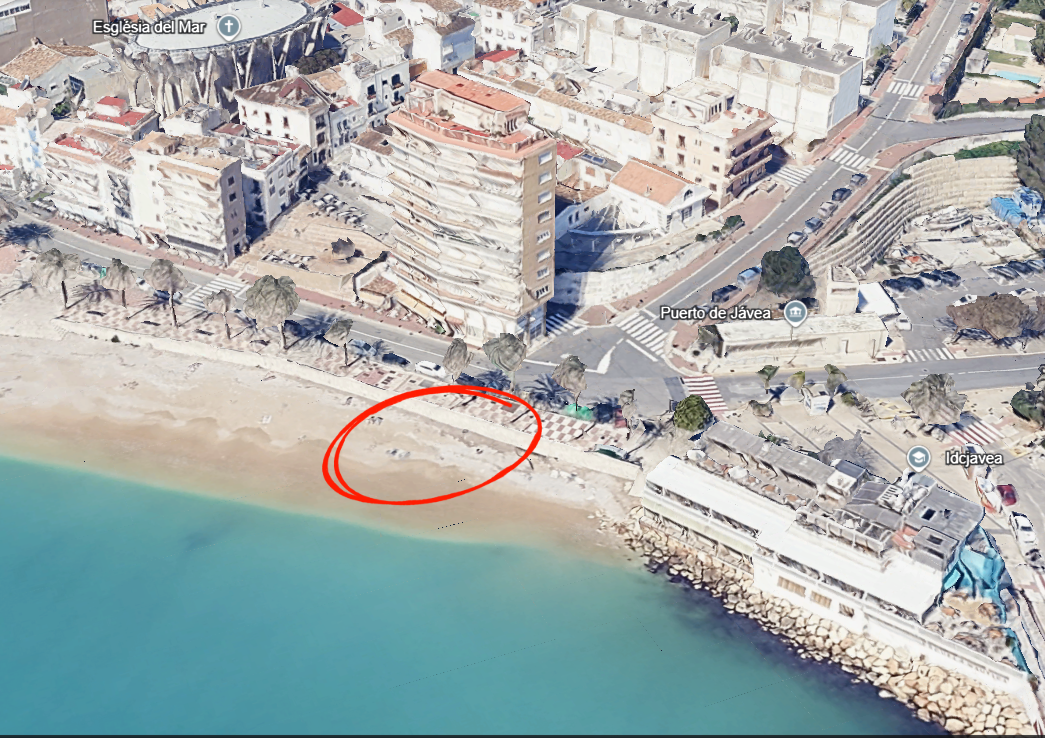
I encourage you to take a walk around the area with the old photograph, and try to locate the buildings that appear. The streets and some of the buildings are the same as they are today.
We will walk along the seafront and arrive at Benissero beach, where there should be another structure of this type, but we have no evidence. Further on, in the first hill, we will find an excavated and marked structure that corresponds to the following anti-aircraft battery:
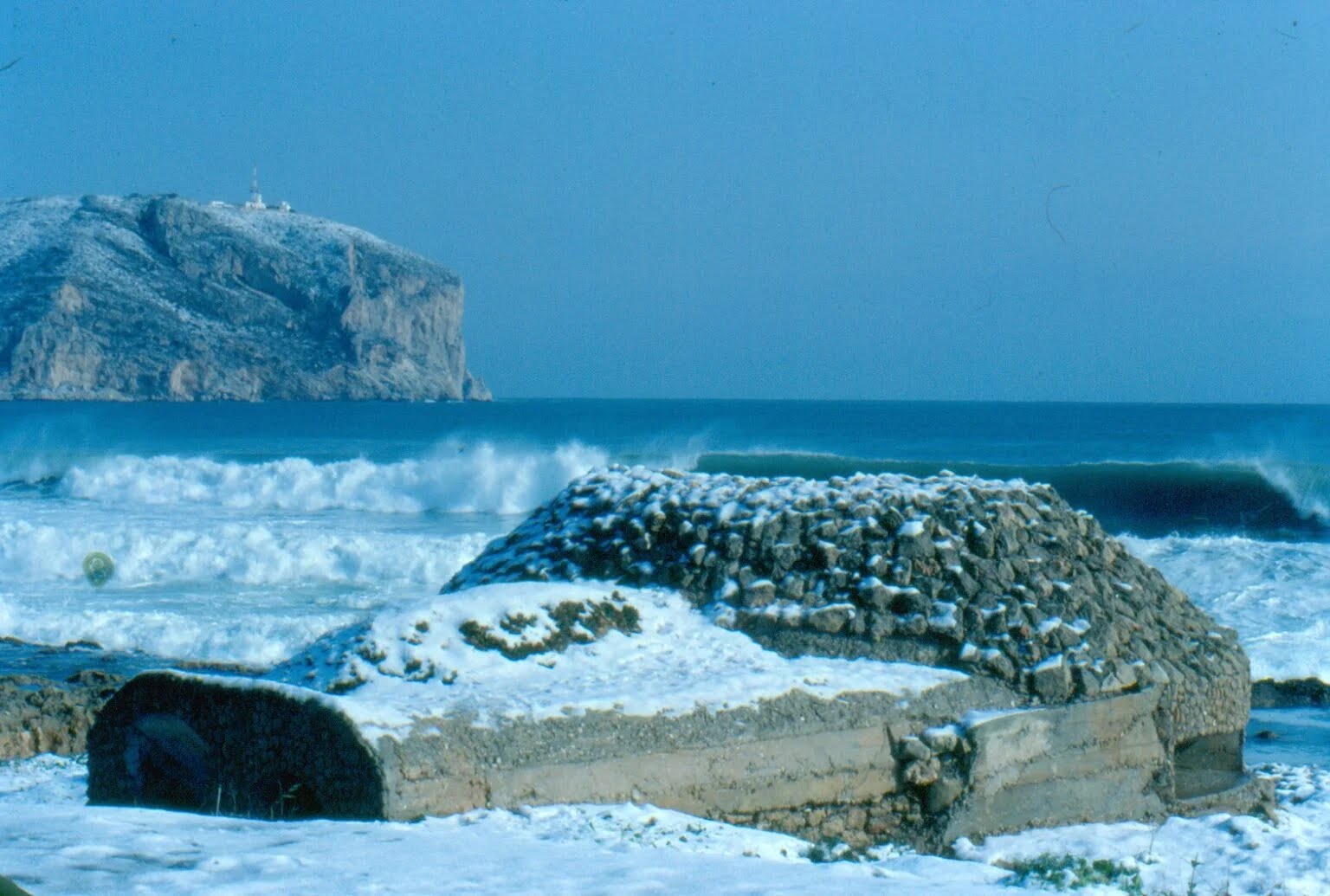 More than fifty years ago.
Currently, this is what you see:
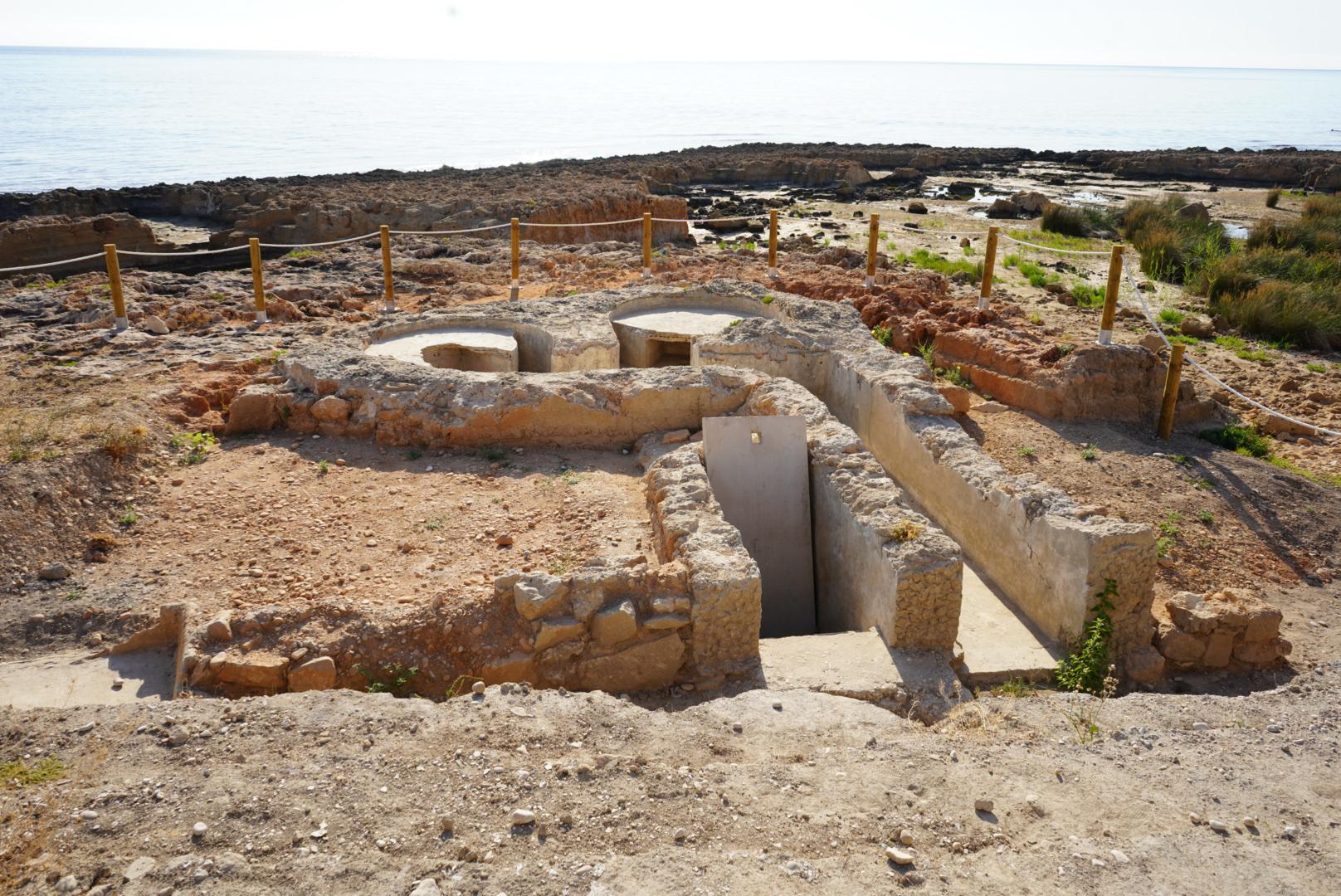
The most recent one we know of, although we are not sure if any material remains exist, is at Cala del Ministro, behind the Parador de Turismo. This site is also important because there is a Roman settlement from an ancient villa and excavations in the rocks that were used as fish farms. You can find more information about this site by clicking here.
Finally, we will walk to the Plana Cave, which is a mass grave where the remains of victims murdered by Pepa were found. We will find a monument dedicated to these murders, which covers the entrance to the cave.
More information here
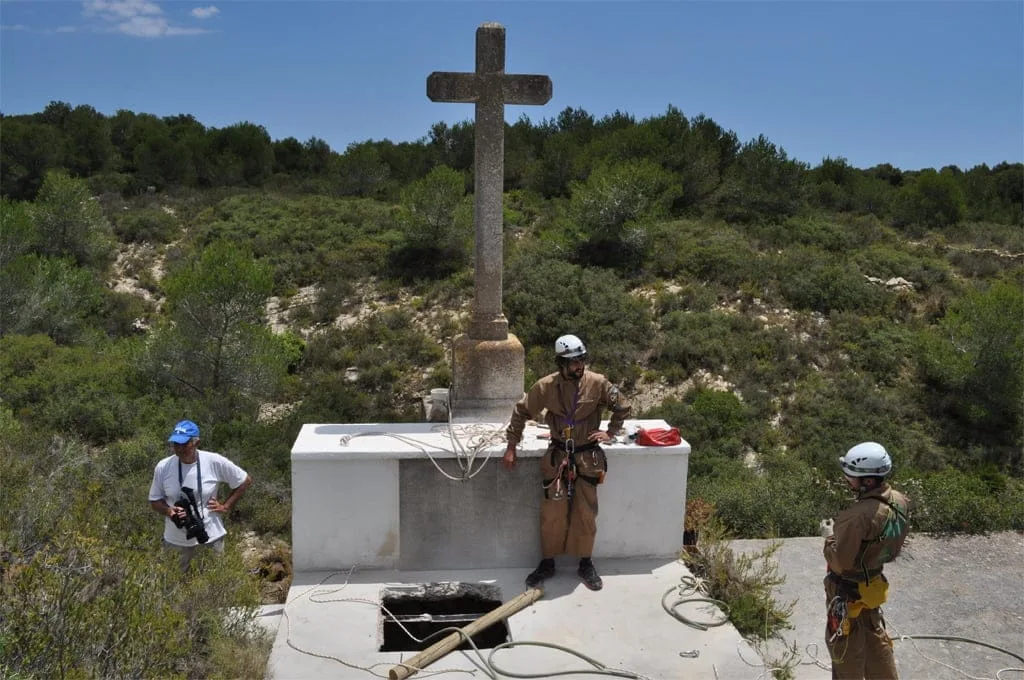 The monument covering the cave.
In this link you will find information about the murders on the night of the cave and the victims found in the pit.
During our stay, we could take the opportunity to sample the typical fish dishes at a restaurant in the harbour. And if we still want to learn more about the history and culture of Xàbia, we should go to the Soler Blasco Archaeological and Ethnological Museum.
Dénia
Stage 5: Municipal Cemetery - Plaça de l'Oest - Plaça de la Constitució - Tunnel - Morand Warehouses - Maristes School
The first stop on our tour of Dénia will be the municipal cemetery. Here there are a total of four mass graves, with their respective memorials. Two of them are for Republicans who were repressed by the Franco regime between October and November 1939, shot at the cemetery wall, which to this day still bears bullet holes.
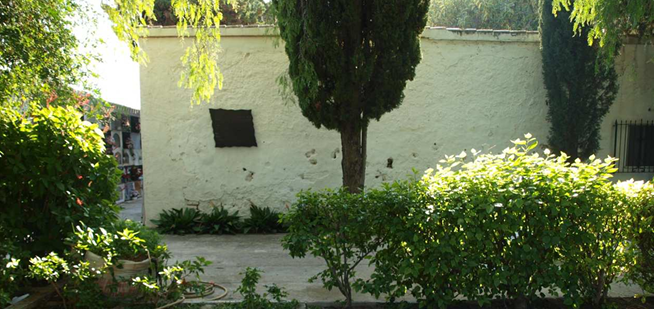 The wall with the bullet marks.
The following links provide more information about these two pits where forty-nine people who had been shot were found:
Pit I of victims of Francoism
Pit II of victims of Francoism
You can also see this tomb with the names of some of those who were shot:
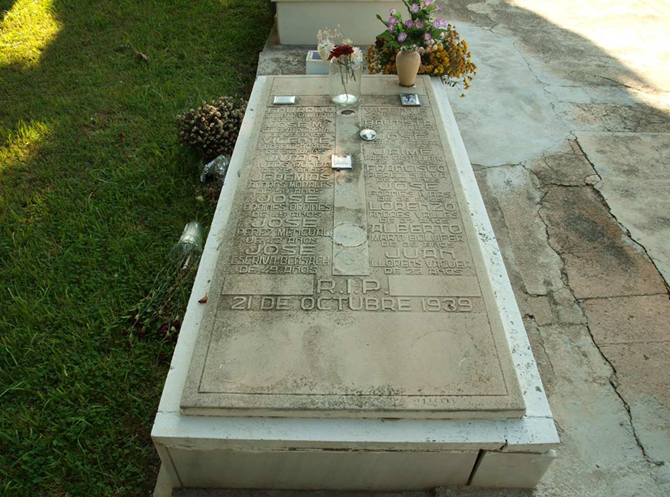
The third grave is for foreign sailors who were victims of the bombings of the port of Denia. They were on a French merchant vessel, the “Brisbane”, when Italian aviation bombed the coast of Denia on 9 June 1938. Three Frenchmen and two British men died. There is a memorial plaque in the cemetery. For more information about the victims, click on the following link:
Sailors' Grave
The final grave we find is also of those who died during the war, specifically victims of “la Pepa”. Only six bodies have been identified. In the link below you will find more information about the Pepa repression during the first months of the war and the names of the victims. In addition, you will also find a small memorial in the cemetery.
Pepa Repression Graves
Furthermore, there is also a commemorative plaque for the Denians who died in Mauthausen.
The next stop will be West Square or Valgamediós Square where, On the site now occupied by a supermarket, there was a Francoist concentration camp called “Campo de Concentración España”, which held up to 2,000 prisoners, who were transferred to other provincial prisons in 1940. Currently, there are no remains of the building that housed this prison, but during our walk through this area, we will have to imagine that where we are now there was a prison that concentrated people considered hostile to the Franco regime, who were mistreated and living in inhumane conditions. Afterwards, we will walk towards the Town Hall along Loreto Street. On the left-hand side of the Town Hall, we will find a building that was used as the judicial district prison, known as the “municipal deposit”. At the beginning of the war, people with conservative ideas were imprisoned there. For example, those who were murdered in the cave had previously been imprisoned here. Once the war had ended, it was used to imprison Republicans or anyone opposed to the new Franco regime. Also in Constitution Square, we will find the Church of Our Lady of Assumption. During the war it was confiscated by the Ministry of Supply, which converted it into a warehouse. On reaching La Mar Street, we will pass the castle tunnel, which was built during the war to be used as an air-raid shelter. Dénia was the victim of thirty-seven air raids, most of them by the German Condor Legion and the Italian air force. There were also two naval attacks by the “Canarias” and the “Almirante Cervera”. For this reason, there is evidence of various shelters and anti-aircraft batteries in the coastal area for its defence.
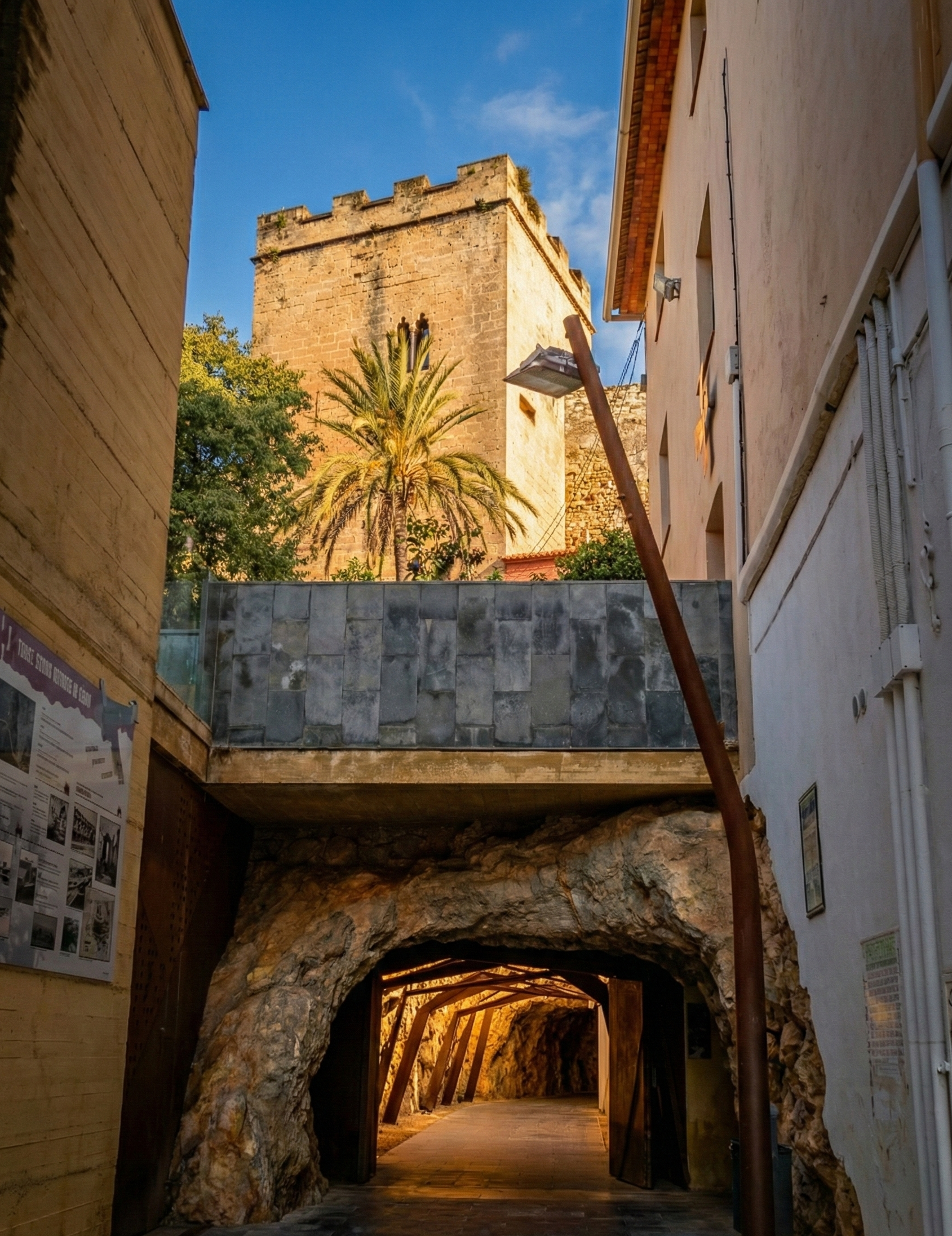
We can go inside and find explanatory posters about when it was built, the bombings, the victims and other places that also have underground shelters.
We'll continue along La Mar Street and on our right, we'll find a series of well-known bars, but few people know that these very same buildings were once warehouses belonging to the Morand family, which were used as schools during the Republic and as a prison after the war.
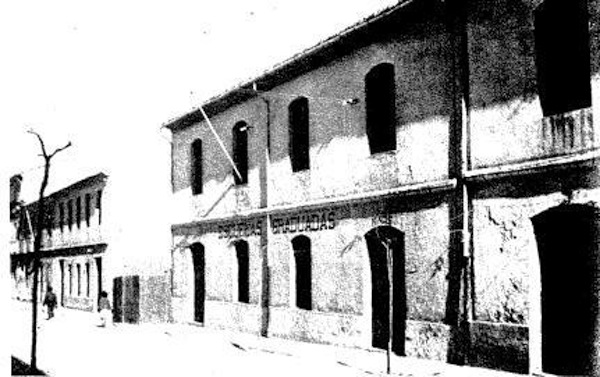
At the beginning of the last century, these were the warehouses of José Morand, where raisins were selected and packed. From 1933, during the Second Republic, with the educational reform aimed at improving the state of education in the country, these buildings were converted into schools. Once the Civil War began, this building was used to house refugees from other parts of the country. Finally, after the war, it was used as a prison, along with other buildings converted for this purpose, as there was not enough space for all the prisoners, victims of Francoism.
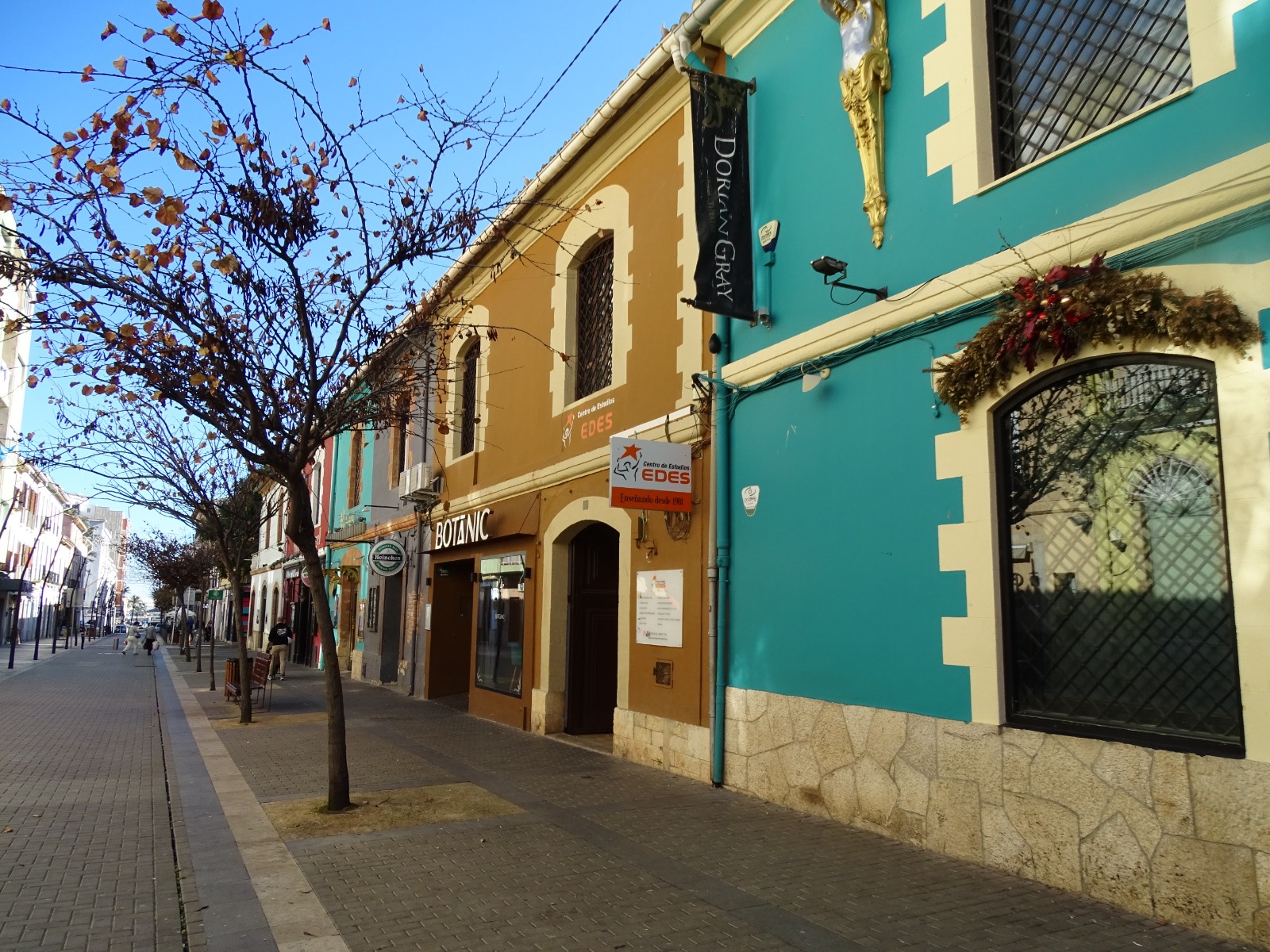
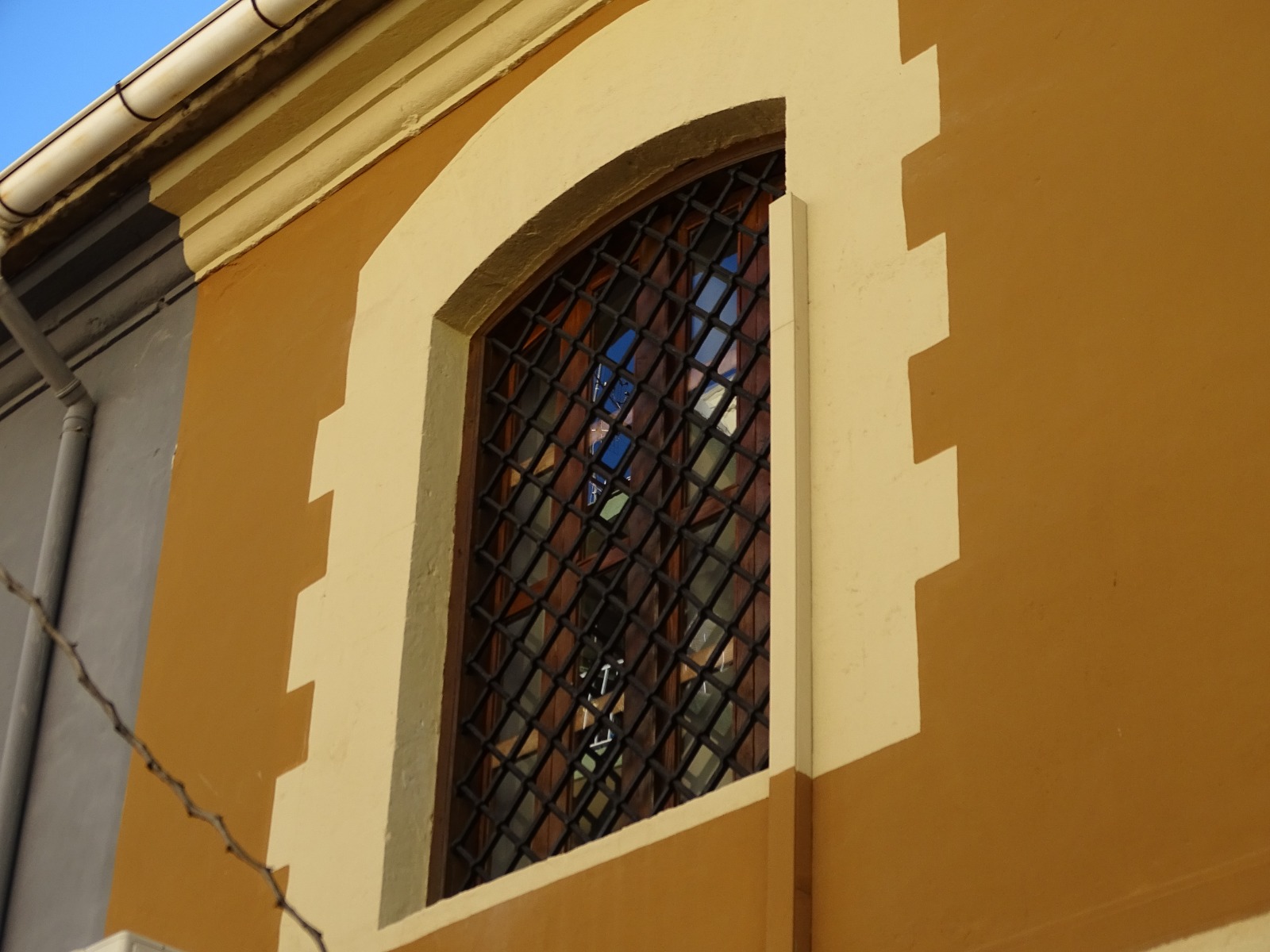
Continuing with our tour, we will pass the current Marist Brothers' school, where we can see the old building that also served as a prison.
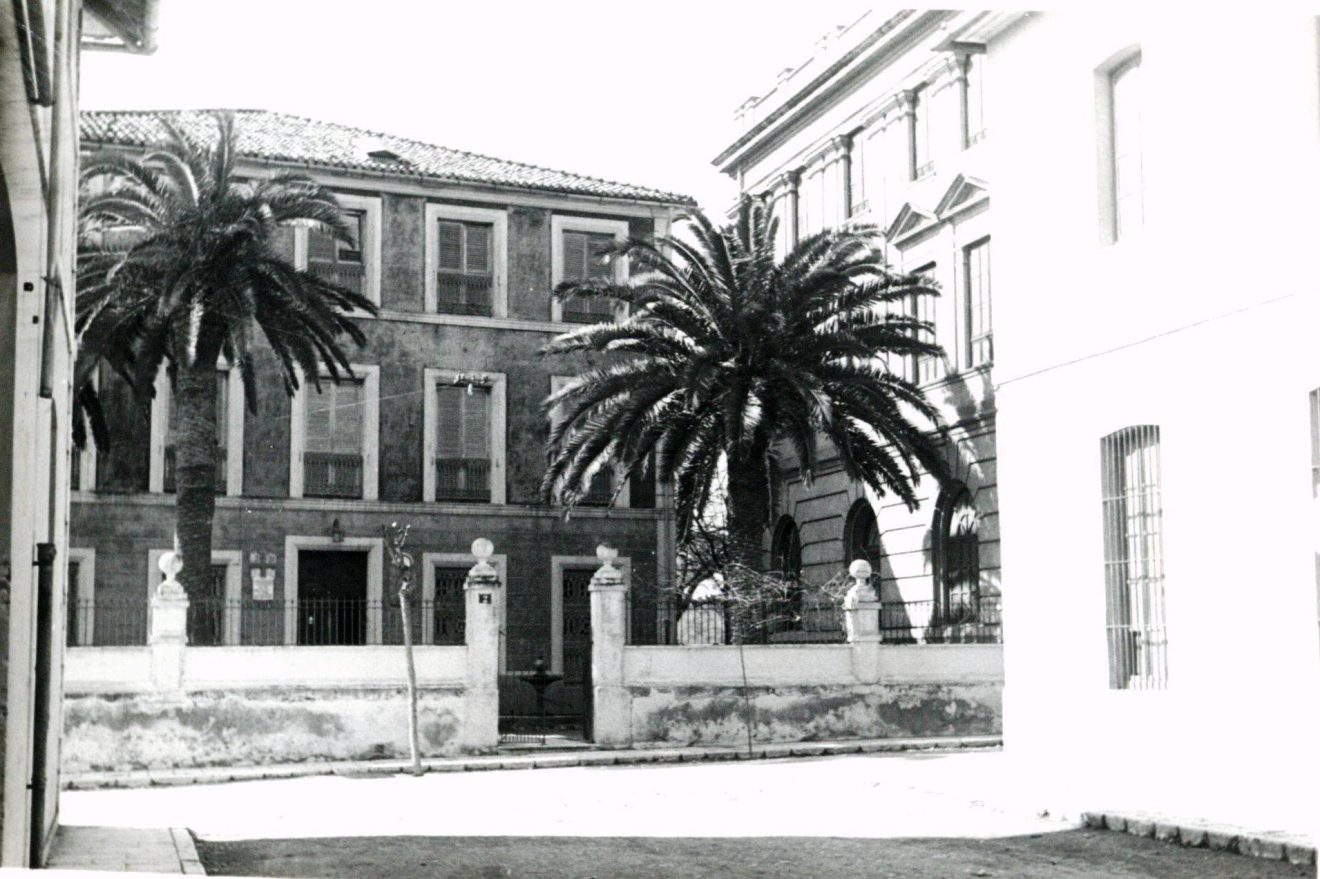
Finally, we'll arrive at Marqués de Campo Street, where we can take the opportunity to have a stroll and have a drink. However, I would like to talk about other points of interest in Dénia, even though they are not open to visitors.
The first is the building that housed the Swedish Home. In May 1937, a facility was set up in Dénia for children evacuated from areas near the front line. It was so called because it was a Swedish aid initiative. Magnhild Olsson was the director of this refugee home, where she personally cared for the children, who were living far from their families. This building is still visible today, although it is a private property and cannot be visited. It is located in the Beniadlà district.
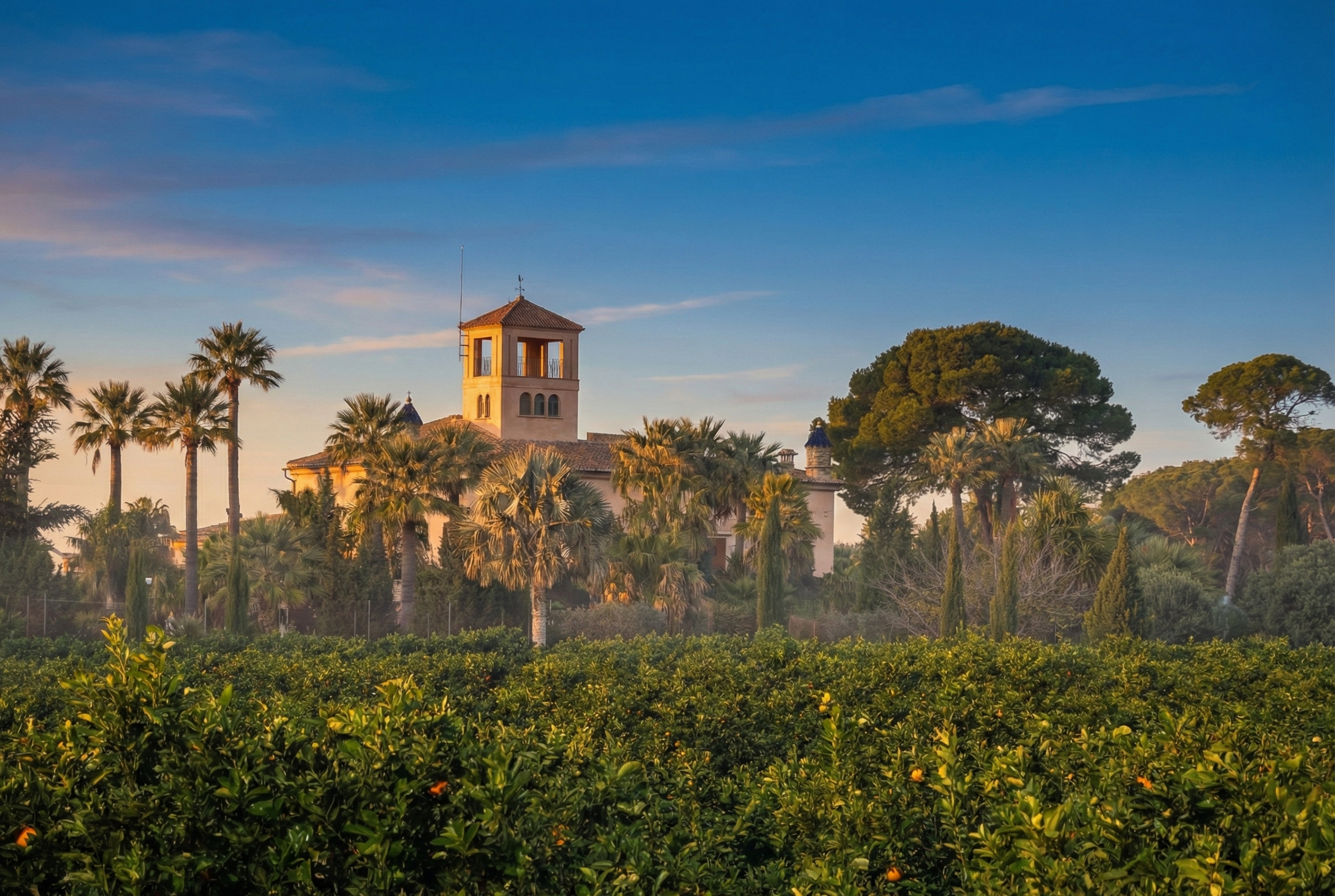
If you are interested in this topic, I recommend the book “The Swedish Home for Children of Dénia during the Civil War: The Diary of Magnhild Olsson”.
Another place of interest is an old building which, according to some oral sources, was used as a hospital during the war, but its real function is still being investigated. It can be found next to the Marina Salut hospital, opposite the emergency entrance. It is in a dilapidated state and is not open to visitors. However, it is believed that in the early 20th century it was a sanatorium belonging to the Krisol group, home to the magazine “Helios”, a naturist publication that covered natural medicine, vegetarianism, pacifism and ecology, among other topics.
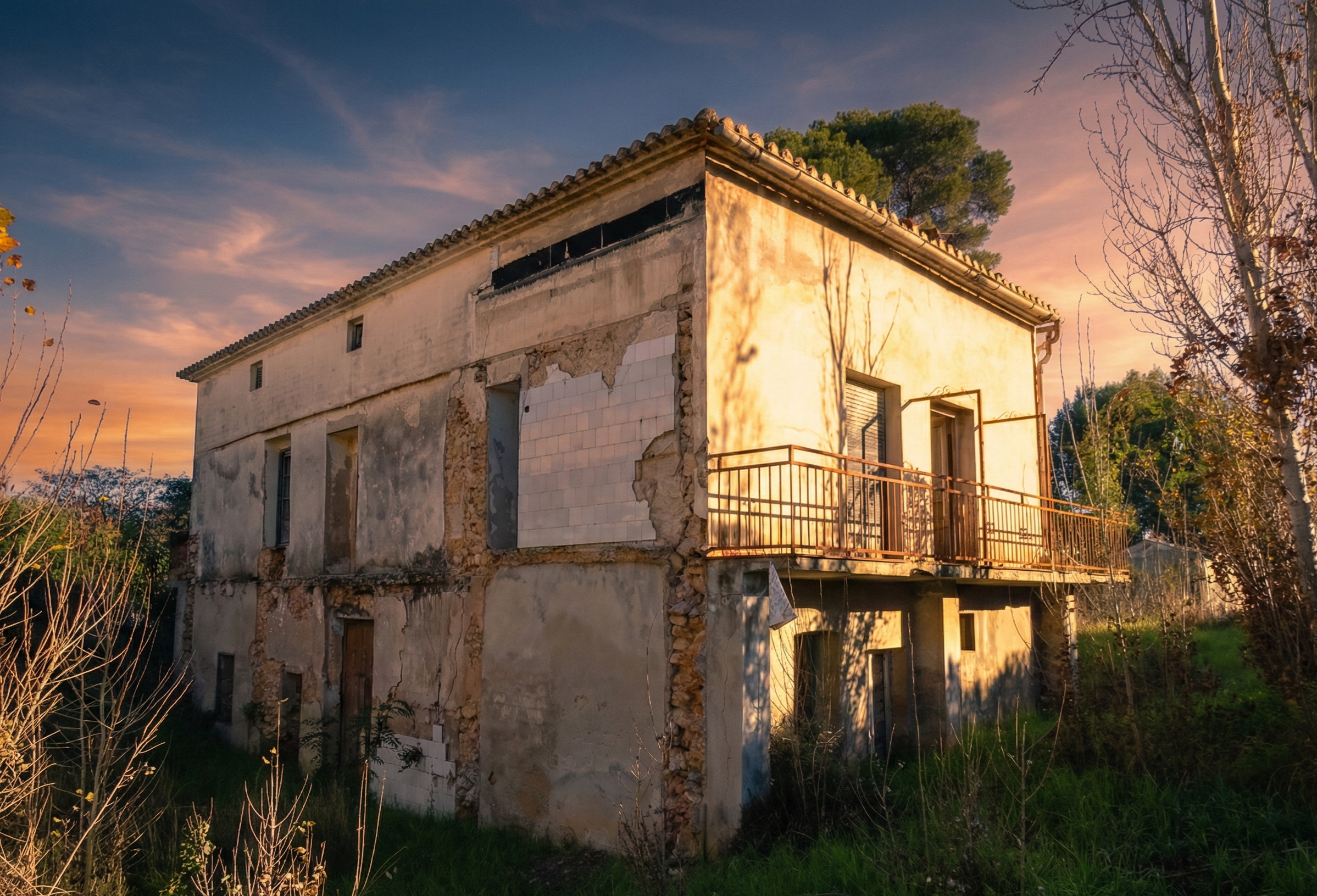
Finally, the area of the Denia coast should be mentioned, which was also equipped with anti-aircraft batteries, and some remains of these bunkers can still be found.
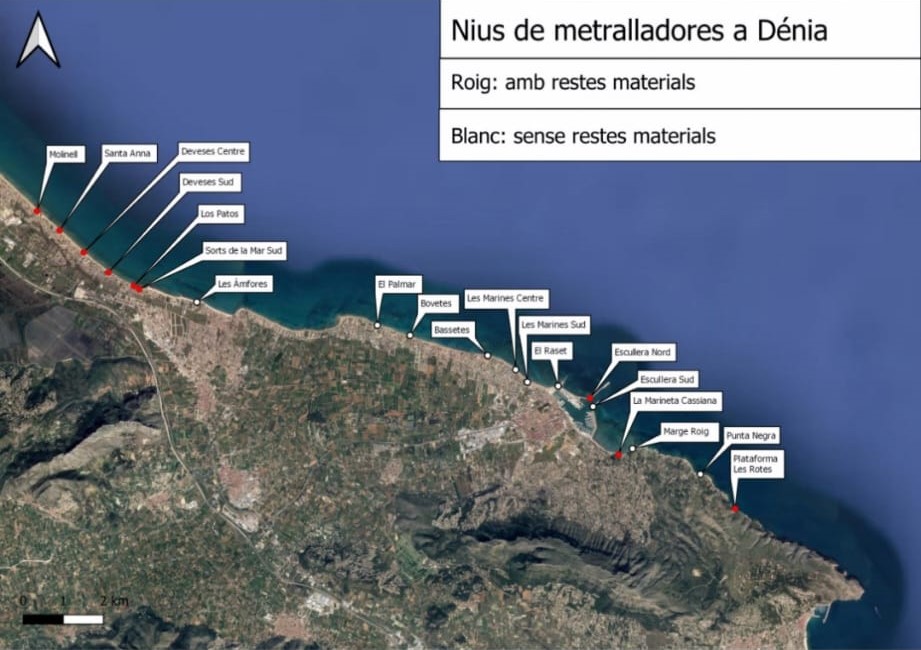
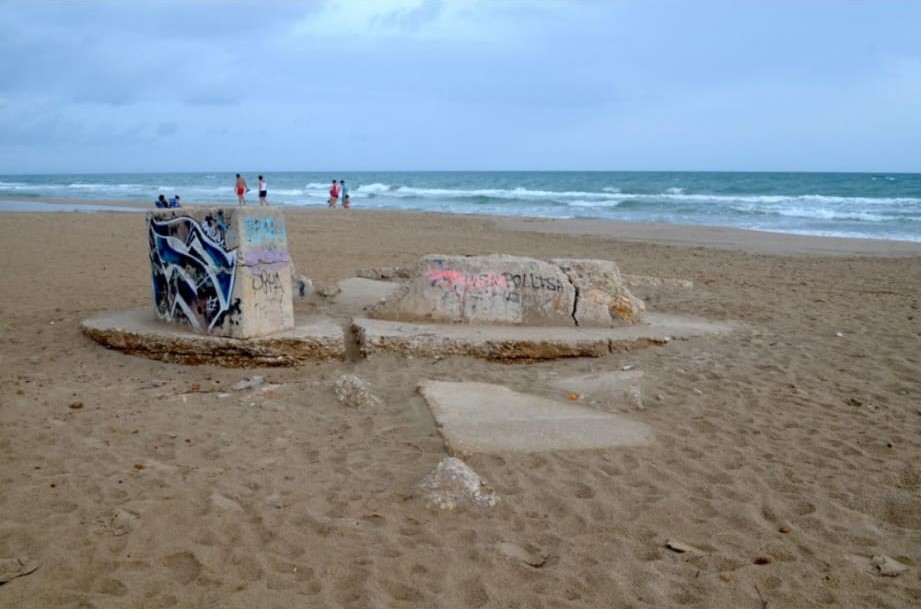
If you are interested in further expanding your knowledge of democratic memory in Dénia, we recommend accessing the following link, where you will find a proposed explanatory route by Teresa Ballester and Rosa Seser.
ROUTE
This concludes the April experience. We hope it has helped you discover places and stories from the Marina Alta that you were unaware of, and to recover a small part of our memory.
Bibliography
Álvarez, L., García, M., Gatell, C., Gibaja, J. C., i Risques, M. (2016). Història d’Espanya. Comunitat Valenciana (Projecte Aula 3D). Editorial Vicens Vives.
Ballester Artigues, T. (2004). La Segona República a Pego. Ajuntament de Pego; Institut d’Estudis Comarcals de la Marina Alta.
Llopis Sendra, R. (2020). Brigadistes. Les Brigades Internacionals a Benissa i Dénia. 1937-1938. Publicacions de la Universitat de València.
Olsson, M. (2004). L'hogar sueco para niños durant la guerra civil: el diari de Magnhild Olsson. (Á. Beneito Lloris, Ed. y Trad.). Institut d’Estudis Comarcals de la Marina Alta.
Preston, P. (2016). La Guerra Civil Española. Debate.
Seser Pérez, R. (Coord.). (2019). Història i memòria: La Guerra Civil a Dénia. Ajuntament de Dénia; Institut d’Estudis Comarcals de la Marina Alta.
*This experience is designed to be done in five stages, corresponding to five different days. We suggest some routes, but each person can adapt the experience to their abilities, physical fitness and interests. If you would like more information or additional places to visit in each village, you can visit the Descobrim la Marina Alta website and tailor the experience to your tastes with your rucksack.
AND MORE. At the table and in bed at the first cry.
 Where to buy |  where to eat |
 where to sleep |  Activities and others |
Translated with DeepL.com (free version)